Table of Contents
“Many of the truths we cling to depend greatly on our own point of view.” — Obi-Wan Kenobi (as quoted by the very serious content strategist who wrote this article)
Twenty-five years ago, Google made a promise to the internet. Make great content, they said, and we’ll sort out the rest. Rank it. Send traffic to it. Connect it to people who are looking for exactly what you’ve built. The creators of the web would create; Google would distribute. It was an arrangement that built industries, careers, and business models across the globe.
That arrangement is changing. Not incrementally — structurally. And if you work in SEO, content marketing, or digital strategy, the signals are arriving fast enough that they’re hard to ignore even if you want to.
This week brought two pieces of evidence that, when you read them side by side, create a picture that’s clarifying and uncomfortable in equal measure.
The first is a rare blog post from Rand Fishkin — someone whose writing has shaped SEO thinking for two decades — who felt the argument was important enough to break a long posting hiatus over. The second is a new tool from MIT’s Work Analytics Lab that maps AI exposure across specific workplace tasks, and its findings for marketing roles are striking.
Let’s put both of them on the table and examine what they actually mean.
What Rand Fishkin Is Actually Arguing (And Why It Matters That He’s Saying It)
Rand Fishkin is not a doom-and-gloom commentator. He built Moz. He created SparkToro. He’s spent his career helping practitioners navigate change, not predicting the apocalypse.
So when someone with his track record of measured, evidence-based analysis writes something he calls “necessary,” it’s worth engaging with the argument seriously rather than dismissing it.
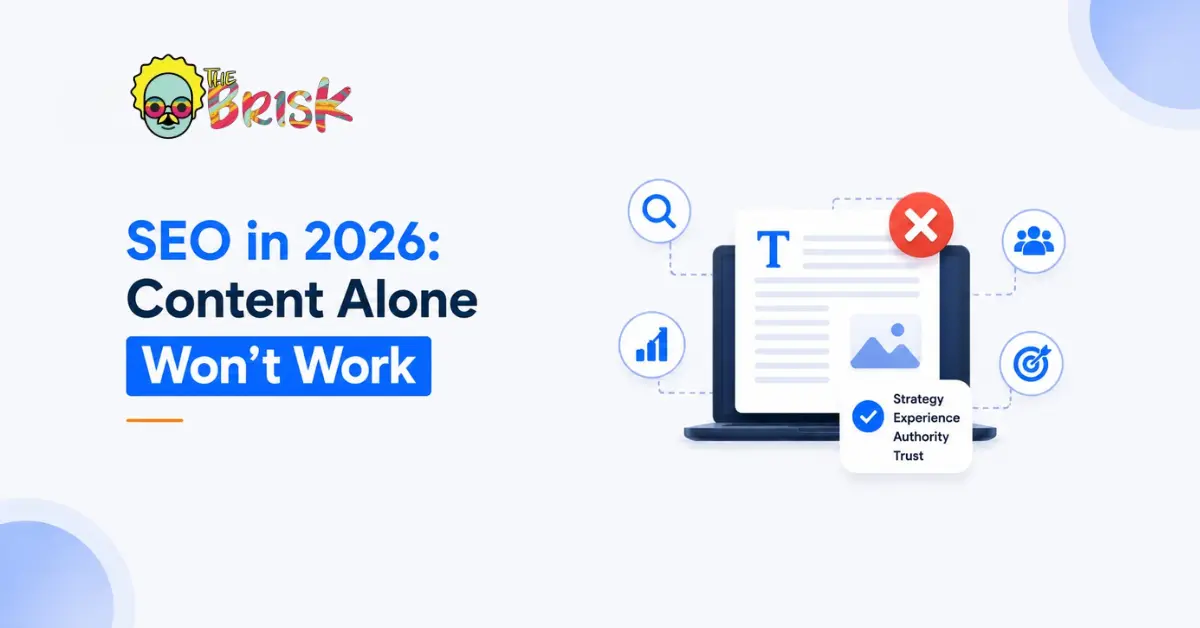
His thesis, condensed: the Google-content creator relationship has fundamentally changed. For 25 years, Google’s value proposition was making information universally accessible — which meant sending users to the original sources of that information.
Today, Google’s competitive position in the AI era depends on something different: providing answers directly, keeping users in Google’s ecosystem, and using the web’s content as raw material for AI-generated responses rather than as destinations to send users toward.
Rand calls this “the great digital enclosure of publishing.” The content gets extracted. The traffic doesn’t follow.
The result is what many SEOs have been watching in their analytics for the past 18 months: zero-click searches increasing, AI Overviews capturing intent without driving click-throughs, and content that ranks perfectly well but converts website visits into a fraction of what the same ranking would have delivered three years ago.
His conclusion is one that deserves to be quoted carefully: “Ignore traffic. Make inimitable products. Shift your priorities away from ‘great content’ on your own site and toward ‘great marketing’ on the platforms where your audience pays attention. Influence is the new traffic.”
Breaking Down Rand’s Two Solutions
Solution One: Collective Action
Rand’s first proposed response is that content creators and publishers should coordinate to resist AI-based content extraction — gating content, challenging terms of service, and using collective leverage to renegotiate the terms of the Google relationship.
This is intellectually coherent but practically limited for most practitioners. Collective action requires scale, coordination, and the ability to absorb traffic losses in the short term while building negotiating leverage over time.
Large publishers with established audiences and legal resources can participate meaningfully. Individual practitioners, small agencies, and niche content businesses generally cannot. The data point that makes this concrete: sites that experimented with blocking AI crawlers found the traffic cost arrived immediately, while the leverage did not.
For most people reading this, the collective action path is not the primary strategic vehicle. Which makes Rand’s second solution the more important one.
Solution Two: Inimitable Products
This is where Rand’s argument becomes genuinely original and worth sitting with. His prescription for the zero-click web isn’t better SEO technique or more content volume — it’s fundamentally different: build things that cannot be scraped, summarized, or algorithmically disintermediated.
His examples are deliberately tactile and physical: ultrasonic chef’s knives. Made-to-measure suits with oceanic personality. WWI-era Armagnac sourced specifically to serve someone’s 98-year-old grandfather something older than him.
These aren’t content plays. They’re products and experiences that require human expertise, physical craft, genuine curation, and irreplaceable judgment — and no AI can produce an Overview that substitutes for them.
For digital practitioners who don’t make luxury goods, the harder question is what “inimitable” looks like in their specific context. Rand’s framing suggests some candidates:
- Original proprietary research that doesn’t exist elsewhere on the internet.
- Direct access to communities, sources, or networks that aren’t publicly accessible.
- Pattern recognition and judgment developed through years of lived practice.
- A perspective that is genuinely yours — not a synthesis of existing perspectives, but something formed through unique experience.
- Relationships with your audience that transcend the content itself.
“Build an audience on a platform you don’t own. Publish there. Engage there. Use it to drive interest in your inimitable product.” — Rand Fishkin
What the MIT AI Labor Exposure Map Reveals for Marketing Roles
If Rand’s analysis tells you where the strategic pressure is coming from, MIT’s AI Labor Exposure Map — developed by doctoral candidate Pierre Bouquet at MIT’s Work Analytics Lab — tells you how much pressure you’re personally under.
The map draws on data from Anthropic’s own AI Economic Index and measures penetration scores for specific workplace tasks — identifying which tasks current AI systems can already handle, significantly assist, or have limited capability with.
The findings for marketing roles are direct and worth looking at without flinching:
- 65% of the tasks a marketing specialist performs are AI-exposed under current systems.
- Marketing specialists rank fifth among the occupations most exposed to AI — ahead of customer service representatives and data entry workers.
- The exposed tasks include market research, competitor analysis, campaign planning, and data interpretation — the core analytical and research functions that have defined many marketing roles.
Bouquet is careful to frame this appropriately. The map wasn’t designed as a prediction of job elimination. AI systems capable of performing tasks and AI systems that will actually replace workers are meaningfully different things — adoption lags capability, organizational change is slow, and human judgment remains necessary even in heavily automated workflows. But the capability exposure is real, and it’s concentrated in exactly the tasks that SEO professionals and content marketers spend the most time on.
The question the MIT data forces isn’t whether AI will affect your role. It’s a more specific one: of the tasks you currently perform, which 35% isn’t AI-exposed? And is that 35% substantial enough — differentiated enough, valuable enough — to build a meaningful practice around?
The Two Strategic Paths and Who Can Actually Walk Them
Rand’s diagnosis maps to two distinct strategic paths, and they’re not equally accessible to everyone. It’s worth being honest about that rather than pretending the advice is universally applicable.
Path One: The Large Publisher / Established Brand Route
Organizations with large established audiences, proprietary data, brand recognition, and the financial runway to absorb traffic losses while pivoting have real options. They can experiment with content gating. They can invest in first-party data infrastructure.
They can develop products and subscription models that don’t depend on Google traffic. Major media organizations, established research institutions, and category-leading brands have the capital and audience depth to navigate this transition on their own terms.
Path Two: The Individual Practitioner / Small Agency Route
This path requires different kinds of honesty. If 65% of your current workflow is automatable, the question isn’t whether to automate it — it’s whether you’re investing in the 35% that isn’t. That 35% looks different for different practitioners:
- For SEO strategists: the ability to read an industry, understand competitive dynamics, and make judgment calls that tools can’t make.
- For content marketers: the ability to develop a genuine point of view, build community trust, and create content that reflects lived experience.
- For agency owners: the ability to understand a client’s business deeply enough to advise on strategy, not just execute tactics.
- For everyone: the relationships, access, and reputation that make you irreplaceable to the specific clients and communities you serve.
Rand’s advice for this path is clear: build an audience on a platform where your audience already pays attention. Publish there. Engage there. Convert that attention into demand for whatever you do that AI cannot replicate.
The Three Things Worth Carrying Into This Transition
If you’re navigating this shift — and if you work in digital marketing, you are — there are three practical orientations worth maintaining:
1. Map Your Own Exposure First
Before deciding which parts of your work to protect, automate, or eliminate, understand specifically where you’re exposed. The MIT map is a starting point, but your personal version matters more. Which of your current tasks could an AI system handle adequately today? Which require judgment that isn’t replicable? Which involve relationships, access, or context that don’t exist in any training dataset?
You cannot navigate from a position you haven’t honestly assessed. And the practitioners who skip this step and jump straight to strategic decisions will find those decisions poorly calibrated.
2. Separate Tasks from Expertise
The tasks being automated are not the same as the expertise that made you good at them. An AI system can now handle the mechanical execution of competitive keyword research.
It cannot replicate the strategic judgment that comes from having run keyword strategy across 200 different industries and knowing which signals matter in which contexts. The former is a task. The latter is expertise.
This distinction matters because it defines what survives. The SEO professional who has internalized why certain content earns trust, how audiences actually respond to different content approaches, and what makes a recommendation land with a client — that professional is not being automated.
The workflow that produced content at scale using rules-based processes is being automated. These are not the same person.
3. Travel with People Who Are Honest About the Terrain
Rand Fishkin is being honest about the terrain. The MIT map is being honest about the terrain. The practitioners who will navigate this transition successfully are the ones who engage honestly with the difficult signals rather than looking for reassurance that everything is fine.
That doesn’t mean catastrophizing. It means testing conclusions against your own data, updating your models as evidence accumulates, and making decisions based on what’s actually happening rather than what you wish were happening.
What “Inimitable” Actually Looks Like in a Digital Context
Let’s get concrete about what Rand’s prescription looks like for digital practitioners who don’t make artisan knives or bespoke suits.
Inimitability in a digital context isn’t about secrecy or technical complexity. It’s about genuine differentiation that stems from who you are, what you know, and what access you have — things that can’t be synthesized from public training data.
- A boutique SEO agency that has worked exclusively with direct-to-consumer e-commerce brands for 15 years has pattern recognition that doesn’t exist in any dataset.
- A content marketer who has built and maintained a direct community relationship with 50,000 niche professionals has access that can’t be scraped.
- A researcher who conducts original primary research — surveys, interviews, proprietary data collection — is producing content that doesn’t exist anywhere else.
- A practitioner whose reputation generates referral business independent of search traffic has broken the dependency on Google’s traffic allocation decisions.
The common thread is that these practitioners have invested in depth rather than volume, in access rather than visibility, and in relationships rather than rankings. Those investments compound over time. They’re also the investments most at risk of being deprioritized when tactical execution pressure is high — which is precisely why the current moment demands intentional reallocation.
Read more related articles on The Brisk Digital

No Comments