Table of Contents
Algorithms have quietly run the show on social media for over a decade. Platforms decide, based on engagement signals, behavioral data, and internal prediction models, what shows up in your feed — and marketers have spent years reverse-engineering those systems to maximize reach.
That model is starting to shift. Threads, Instagram, and TikTok are all rolling out changes designed to give users more direct, explicit control over the algorithm shaping their own feed — rather than leaving every decision entirely to the platform’s prediction engine.
For years, platforms decided what you saw, and marketers learned to play to that black box. Now Threads, Instagram, and TikTok are handing some of that control directly to users — and nobody fully knows yet what it means for brand visibility.
This piece looks at what’s actually changing, why platforms are making this move now, and — most importantly for anyone managing a brand presence on these platforms — what the genuinely uncertain implications are for marketers going forward.
What “user-controlled algorithm” actually means
Historically, the algorithm driving your feed on platforms like Instagram or TikTok has been almost entirely a black box from the user’s side. You could influence it indirectly — by liking, commenting, following, or spending time on certain content — but you had no direct lever to pull. The platform inferred your preferences and adjusted accordingly, with no transparency into how or why.
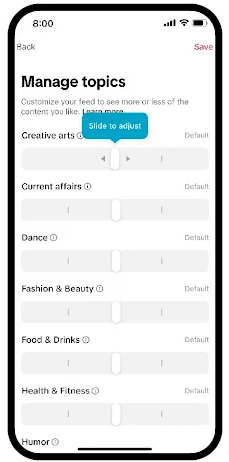
The changes now rolling out across Threads, Instagram, and TikTok move toward giving users more explicit say in that process — more direct ways to shape what the algorithm prioritizes, rather than relying purely on the platform’s own inference from indirect behavioral signals.
The specifics vary by platform, but the underlying direction is consistent: shifting some genuine control from the platform’s prediction engine to the user’s own stated preferences.
Why platforms are making this move now
There’s no single confirmed reason driving this shift across three different platforms simultaneously, but a few plausible factors are worth considering. Algorithmic feeds have faced sustained criticism over the past several years — concerns about content bubbles, addictive engagement design, and a general sense among users that they have too little agency over their own online experience.
Giving users more direct control over their feeds is, at least in part, a response to that pressure. It can be framed as a user-empowerment and transparency move, which carries real public relations value for platforms that have faced ongoing scrutiny over algorithmic design.
It may also reflect platforms recognizing that user trust and long-term retention benefit from people feeling like active participants in their own experience, rather than passive recipients of whatever the algorithm decides to serve them.
The optimistic case for marketers
There’s a genuinely positive read on this shift for brands and creators, and it’s worth taking seriously rather than assuming this is automatically bad news.
If users gain more direct control over what kind of content their feed prioritizes, the people who do choose to actively engage with your specific niche, industry, or content type are likely to see more of it, more consistently.
That’s a fundamentally higher-intent audience than one assembled purely through a platform’s behavioral prediction — these are people making an active choice to keep seeing your kind of content, not people the algorithm has merely guessed might be interested based on indirect signals.
For brands with a clearly defined niche and a genuinely engaged existing audience, this could mean a more efficient, more durable relationship with the people who matter most — less algorithmic noise diluting reach to your actual target audience.
The harder case for marketers
The flip side of this shift is a real concern, particularly for brands and creators still trying to build initial audience and reach. Algorithmic discovery — the mechanism that’s historically let a new account or an unfamiliar brand surface in front of people who didn’t yet know they were interested — has been one of the most valuable, if unpredictable, growth tools on social platforms.
If users are given more direct steering control over their own feeds, there’s a reasonable concern that they’ll steer toward more of what they already know and like, rather than leaving room for the platform’s algorithm to take a chance on surfacing something genuinely new.
That could make organic discovery for unfamiliar brands and creators meaningfully harder, even as it strengthens the relationship between established accounts and their already-engaged followers.
The honest answer right now is that nobody — including the platforms themselves — fully knows how this nets out. It could strengthen niche communities while making cold discovery harder, or it could open new doors we haven’t anticipated yet. Both are plausible outcomes from the same underlying change.
What to actually do while this plays out
Given the genuine uncertainty here, the most sensible approach is to focus on strategies that perform well under either scenario, rather than betting heavily on one specific outcome.
Strengthen your topical authority and consistency
If user-directed algorithms reward depth and consistency in a specific niche over broad, scattered appeal, the brands and creators who’ve built a clear, consistent identity around a specific topic or audience are best positioned to benefit. This is a good strategic bet regardless of how the algorithm changes ultimately play out, because topical clarity tends to perform well under almost any algorithmic system.
Invest more in your existing engaged audience
If users increasingly get to choose what they keep seeing, your current most engaged followers become more valuable, not less. Nurturing that relationship — through consistent quality, genuine engagement, and content that rewards continued attention — pays off more directly in a world where users have explicit control over what they keep seeing.
Make your content immediately legible as relevant
In a system where users are more actively steering toward specific interests, content that makes its relevance to a specific audience immediately obvious — through clear framing, strong opening hooks, and unambiguous topical signals — is more likely to be recognized and rewarded by users actively curating their own feed.
Don’t abandon discovery-oriented tactics entirely
Even as user control increases, platforms are unlikely to remove algorithmic discovery entirely — it remains valuable to their own growth and retention goals. Continuing to invest in tactics that support broader discovery, like strategic use of trending formats, collaborations, and shareable content, still makes sense as a complementary strategy alongside a stronger focus on your core engaged audience.
What to watch for next
As these changes continue rolling out across Threads, Instagram, and TikTok, a few specific things are worth monitoring closely: whether engagement metrics for niche, consistent accounts improve relative to broad, scattered content strategies; whether new account growth and discovery metrics show any measurable slowdown industry-wide; and whether platforms introduce any new tools specifically designed to help brands and creators navigate user-controlled feed settings, which would suggest the platforms themselves are actively managing the discovery tradeoff this shift creates.
Nobody has a fully confident answer yet on how user-controlled algorithms will reshape brand reach. What’s clear is that the platforms are moving in this direction regardless, and the brands paying attention now — building genuine niche authority and nurturing real engagement — will be better positioned no matter which way this settles.
Worried about how algorithm changes might affect your brand’s organic reach?
The Brisk Digital builds content and engagement strategies that perform regardless of which way the algorithm winds are blowing.



No Comments