Table of Contents
Budget allocation decisions rarely feel dramatic in the moment they’re made. They accumulate gradually — a percentage point here, a reallocation there, a channel prioritised because it’s measurable, a programme deprioritised because its impact is harder to attribute.
It’s only in retrospect, when the consequences of a sustained allocation pattern become visible in business results, that the decisions look significant. In recent years, a growing share of marketing budgets has been directed toward Awareness and Conversion initiatives, often at the expense of longer-term brand-building and retention efforts.
Gartner’s 2026 CMO Spend Survey, conducted among 401 marketing leaders across North America, the United Kingdom, and Europe, captures a sustained allocation pattern that’s been building for two years.
The headline numbers describe a marketing investment posture that is heavily oriented toward Awareness and Conversion initiatives, customer acquisition, and digital optimisation, while increasingly neglecting the loyalty and retention investments that sustain the long-term value of acquired customers.
“As AI reshapes the marketing mix, many CMOs are channelling more investment into digital channels and customer acquisition in pursuit of growth. However, the most AI-mature companies are maintaining a more balanced funnel investment approach.” — Ewan McIntyre, VP Analyst and Chief of Research, Gartner Marketing Practice
Understanding what’s driving this shift, why the most sophisticated marketers are doing something different, and what the long-term risks are for brands following the average pattern is the core of what this article covers.
Where Media Money Is Going in 2026
The Gartner survey data paints a specific picture of where marketing investment is concentrated:
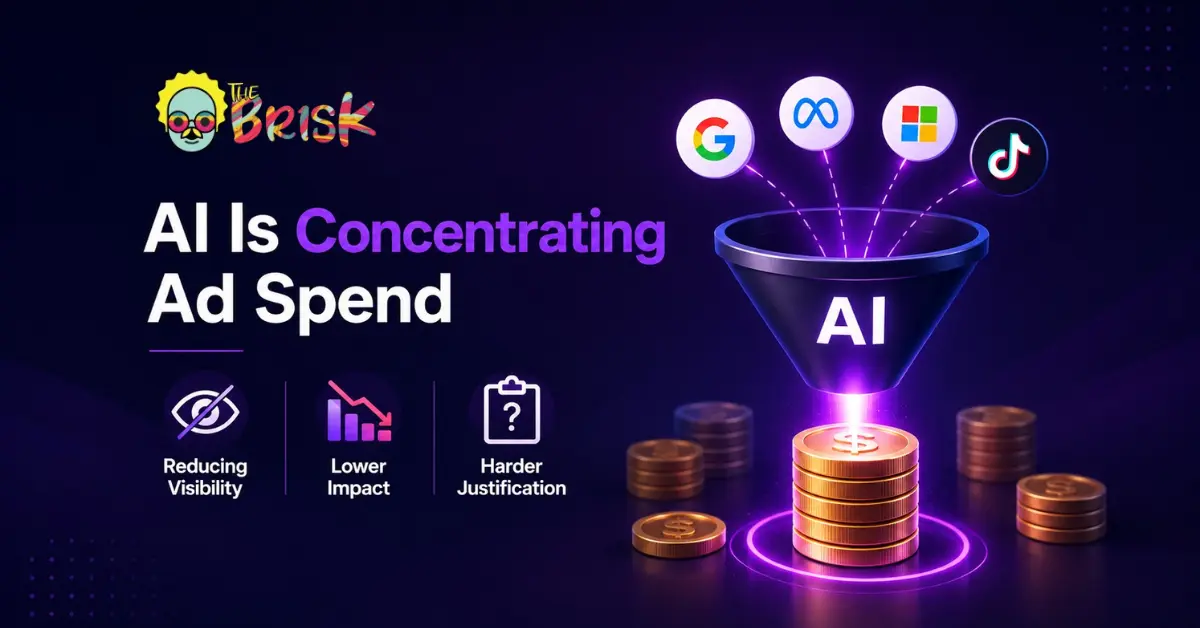
Awareness and conversion: 62.6% of total media spend — up 10%+ since 2024. Loyalty and retention: under 15% — down 29% since 2024.
- Digital media now represents over two-thirds (67%+) of total media investment in 2026, up 18% since 2024.
- CMOs cite enhanced personalisation capabilities and the ability to AI-optimise digital channels as the biggest influences on their channel mix decisions.
- Labor’s share of total marketing budgets rose from 21.9% in 2025 to 24.5% in 2026 — contradicting the assumption that AI investment automatically reduces headcount needs.
- 70% of CMOs report their internal marketing processes are not mature enough to effectively implement and scale AI.
- 38% of CMOs say lack of internal AI expertise and talent is the top barrier preventing AI-driven efficiency.
The overall picture is of a marketing investment posture optimising heavily for acquisition and digital measurability, with talent investment rising alongside tool investment rather than replacing it, and AI maturity significantly lagging AI ambition.
Why This Allocation Shift Is Happening
The shift toward awareness and conversion spending and away from loyalty and retention isn’t irrational. It’s the logical consequence of several converging pressures that CMOs are navigating simultaneously.
Measurement Pull: You Invest Where You Can Prove Impact
Digital channels offer attribution, optimisation, and measurable outcomes in ways that loyalty and retention programmes typically don’t. A digital acquisition campaign has impressions, click-through rates, conversion rates, and cost per acquisition.
A loyalty programme has renewal rates, retention rates, and lifetime value calculations that are real but harder to tie directly to specific marketing investments within a quarterly reporting cycle.
In an environment where every budget line needs to justify its existence, investment flows to what can be measured. This is Goodhart’s Law applied to marketing investment: measurement convenience becomes an unspoken strategy.
AI Optimisation Pull: The Tools Work Better on Acquisition
AI-powered media buying, targeting, and optimisation tools have largely been built and refined around customer acquisition use cases. The programmatic advertising ecosystem is optimised for conversion. AI tools that dynamically adjust bids, creative, and targeting to maximise acquisition efficiency are mature and widely available.
Loyalty and retention programmes — which operate on longer time horizons, through different channels (email, app, direct communication), and with different success metrics — are less well-served by the current generation of AI marketing tools. CMOs who are allocating budget toward “AI-optimisable channels” are naturally allocating more toward acquisition.
Growth Pressure: Acquisition Looks Like Growth
New customers are a highly visible signal of growth. New customer counts appear in board presentations, investor communications, and growth metrics dashboards. Retention rates and loyalty programme engagement are important long-term value drivers but are less visible in the reporting frameworks that drive executive attention.
CMOs under pressure to demonstrate growth naturally prioritise the metric that most clearly signals it in the short term.
The Hidden Risk in the Current Allocation Pattern
The problem with the current allocation trend isn’t that awareness and conversion spending is wrong. It’s that the 29% reduction in loyalty and retention investment creates a structural risk that doesn’t show up immediately but compounds over time.
The Retention Economics Problem
The economics of customer acquisition versus retention are well-established. Research from Bain consistently shows that a 5% improvement in customer retention can increase profits by 25% to 95%, depending on the industry.
Acquiring a new customer typically costs five to seven times more than retaining an existing one. And existing customers spend, on average, 67% more than new customers (Forbes, based on Bain data).
A marketing budget that allocates 62.6% to acquiring new customers while cutting 29% from the investment in keeping them is optimising for the expensive end of the customer lifecycle.
The customers being acquired at significant cost may be leaving at increased rates because the retention investment that would have kept them engaged has been deprioritised.
The Loyalty Deficit in the AI Era
Gartner’s separate consumer research compounds this concern. In a media environment where 68% of consumers regularly question whether content is real, and where AI is accelerating content commoditisation across every category, brand loyalty is one of the few durable competitive advantages available.
Consumers who are loyal to a brand are less susceptible to competitive advertising, more likely to advocate through word-of-mouth, and more resilient to the information noise that is making new customer acquisition progressively more expensive.
Reducing investment in the programmes that build and sustain that loyalty — at precisely the moment when brand differentiation is becoming harder and trust more valuable — is a timing risk as much as a budget risk.
What the Most AI-Mature Marketers Are Doing Differently
Gartner’s data includes a crucial nuance. The survey notes that the most AI-mature organisations are taking a different approach from the average. Specifically, they are maintaining more balanced funnel investment — not concentrated at awareness and conversion, but distributed across the customer lifecycle.
This suggests that the shift toward acquisition spending is not what AI actually enables at scale — it’s what AI enables in the short term for organisations that haven’t built the measurement and infrastructure maturity to apply AI tools to retention and loyalty use cases.
Advanced AI applications in lifecycle marketing, personalised retention triggers, churn prediction, and loyalty programme optimisation exist and are being deployed by more sophisticated organisations. The average CMO just hasn’t gotten there yet.
The Labour Investment Paradox
One finding in the Gartner survey that challenges the conventional narrative about AI’s relationship to marketing headcount: labour’s share of total marketing budgets rose from 21.9% in 2025 to 24.5% in 2026.
The expectation — promoted extensively in discussions about AI’s impact on marketing — is that AI tools reduce the need for human labour. The actual 2026 data shows the opposite: as CMOs invest more in AI tools, they are also investing more in people. The two are complementary, not substitutable.
Ewan McIntyre’s conclusion from Gartner’s analysis: “AI changes the kind of marketing capability organisations need, but it does not eliminate the need for capability. As CMOs invest in AI-powered transformation, they must also invest in the talent, governance and operating maturity required to make those tools work in the real world.”
The 70% of CMOs who say their internal marketing processes aren’t mature enough to implement and scale AI, and the 38% who identify lack of internal AI expertise as their top barrier, suggest that most organisations are in an early stage of figuring out what human+AI marketing actually looks like in practice.
Acquiring Customers You Can’t Retain Is an Expensive Strategy
The 2026 CMO Spend Survey data captures a marketing industry in a specific kind of transitional trap: investing heavily in the capabilities AI makes easiest to optimise, while underinvesting in the outcomes that create durable business value.
Acquisition is easier to attribute than retention. Digital is easier to AI-optimise than lifecycle marketing. So acquisition and digital absorb the budget, and retention loses 29% of its share.
The most sophisticated marketers in Gartner’s dataset are doing something different — maintaining balanced funnel investment because they understand that the value of customer acquisition is only realised through the retention investment that follows it.
The rest are optimising for what’s easy to measure, in a direction that is likely to produce growing acquisition costs and declining customer lifetime value over the next two to three years.
Budget allocation is strategy. What you spend money on is what you value. And right now, most marketing budgets are telling a story about valuing short-term measurability over long-term customer value.
Not sure if your media spend allocation is serving your growth goals — or just your measurement tools?
The Brisk Digital helps brands build full-funnel marketing strategies that balance acquisition, engagement, and retention for sustainable, compounding growth.
Let’s audit your marketing investment and find where the real opportunities are.



No Comments