Table of Contents
“Consumers are not looking to outsource shopping decisions to AI. They want AI to help them find better information, compare prices, identify deals and narrow choices, while keeping final decision-making control for themselves.” — Kate Muhl, VP Analyst, Gartner Marketing Practice
The vision of AI Shopping and agentic commerce is compelling in the abstract. AI agents that know your preferences, track prices, identify the right moment to buy, select the optimal product, and complete the purchase on your behalf — all without requiring you to navigate a single product page.
The technology is advancing rapidly. Investment in agentic commerce infrastructure from major platforms, retailers, and technology companies has accelerated substantially in 2025 and 2026.
The consumer is moving more slowly.
A Gartner survey of 322 US consumers conducted in January 2026 reveals a significant gap between the AI commerce capabilities brands are racing to build and the autonomy consumers are actually willing to grant. That gap has direct strategic implications for where marketing and product investment in AI commerce tools should go — and where it shouldn’t.
Where Consumer Willingness Actually Sits
The research tested consumer openness to AI involvement across different stages of the purchase process and different product categories. The pattern that emerges is consistent and clear.
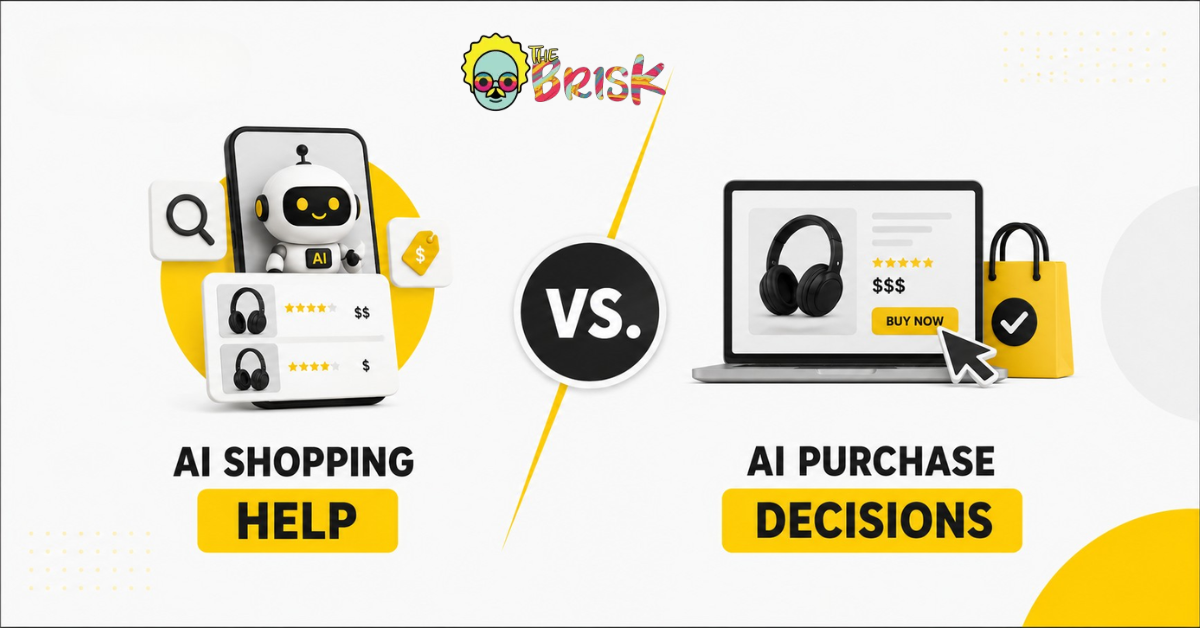
Only 11% of consumers are willing to let AI make a purchase decision on their behalf — even for the lowest-stakes categories like personal care and household supplies.
This figure is striking because it represents willingness for the most mundane, habitual purchases imaginable — the category where AI-driven automation should face the lowest psychological resistance. Yet nine in ten consumers, even when shopping for shampoo or cleaning products, want to retain final decision-making authority.
Willingness increases significantly when the AI’s role is narrowed from “make the purchase” to “help narrow choices”:
- 31% would allow AI to narrow the field of choices for household supply purchases
- 28% would allow AI to narrow choices for personal electronics purchases
The gap between willingness to narrow (31%) and willingness to decide (11%) is the most important number in this research. Consumers are roughly three times more comfortable with AI as a filter than with AI as a decision-maker. That’s not a subtle distinction — it’s a fundamental preference about who owns the final choice.
The Accuracy Problem That Undermines Everything
A separate Gartner survey of 846 US consumers conducted in November and December 2025 adds a more acute concern to the picture. Among consumers who had actually used AI tools during a recent purchase:
- 54% said they had to double-check the accuracy of all information the GenAI tools provided.
- 62% said information from GenAI tools ended up being a waste of their time.
These are not consumers who are philosophically resistant to AI shopping tools. These are consumers who tried them and found them unreliable. The experience data is significantly worse than the intent data, which means the gap between stated willingness and revealed preference may be even larger than the survey numbers suggest.
Kate Muhl’s framing is direct: “Accuracy is now a brand issue. If consumers believe AI shopping tools create more work by requiring them to verify every recommendation, they will not see those tools as convenient or valuable. Marketers must prioritise transparent, reliable information, especially around price, product fit and recommendations.”
This is a crucial reframe. The accuracy failure of AI shopping tools isn’t just a technology problem — it’s a brand trust problem. When your AI tool gives a consumer wrong product compatibility information, outdated pricing, or mismatched specifications, the trust damage extends beyond the tool. It extends to the brand that deployed it.
Understanding the Autonomy Ladder
The Gartner data suggests that consumer acceptance of AI in commerce follows an autonomy ladder — a progression from stages where AI involvement feels helpful to stages where it feels threatening to consumer control.
Stage 1: Research and Discovery (High Acceptance)
Using AI to find products that might be relevant, generate a list of options in a category, compare specifications across products, or surface reviews and ratings. At this stage, the consumer has lost nothing — they have more information and better options to choose from. AI as a research accelerator faces minimal psychological resistance.
Stage 2: Narrowing and Filtering (Moderate Acceptance)
Using AI to reduce a large field of options to a manageable shortlist based on stated preferences, budget, and requirements. The consumer still reviews and selects from the shortlist, but AI has done the filtering work. The 31% willingness figure from Gartner’s research sits at this stage. Roughly one in three consumers is comfortable here — still a minority, but three times the willingness of the final stage.
Stage 3: Recommendation (Limited Acceptance)
AI providing a specific recommendation: “Based on your preferences and history, I recommend this product.” The consumer still makes the final decision, but AI has expressed a view. Acceptance here varies substantially by consumer segment, category, and the perceived quality of the recommendation.
Stage 4: Autonomous Purchase (Very Limited Acceptance)
AI completing the purchase independently based on rules or triggers the consumer has set. The 11% figure from Gartner sits here — and this is the stage that most agentic commerce investment is aimed at. Only one in nine consumers, even for routine household purchases, has reached this stage of comfort.
The strategic insight: most AI commerce investment is concentrated at Stage 4 (autonomous purchase), while most consumer willingness exists at Stages 1 and 2 (research and narrowing). That’s a mismatch between investment and adoption readiness.
What This Means for E-Commerce and Marketing Strategy
Prioritise Top-of-Funnel AI Tools
The highest consumer acceptance and the most defensible near-term investment sits at the research and discovery layer. AI that helps consumers find products they wouldn’t have found otherwise, compare options across a complex specification landscape, identify deals in real time, or surface relevant reviews for their specific use case — this is where consumer willingness exists and where AI can demonstrably improve the experience.
Make Accuracy Non-Negotiable Before Anything Else
The finding that 62% of consumers who used AI shopping tools found the information a waste of their time is not a scaling problem — it’s a quality problem. Before investing in agentic capabilities, brands need to solve accuracy.
Every incorrect product recommendation, wrong price, or mismatched specification that forces a consumer to verify manually doesn’t just waste their time. It teaches them that your AI tools can’t be trusted.
Position AI as Empowerment, Not Delegation
Consumer resistance to autonomous AI purchasing is, at its core, about maintaining the feeling of control over their own decisions. Marketing messaging around AI shopping tools that emphasises empowerment — “AI helps you find the best deal faster” — will resonate far better than messaging that emphasises delegation — “Let AI handle your shopping for you.” The tools can do the same things; the framing determines consumer receptivity.
Calibrate Investment to Demonstrated Readiness
The agentic commerce vision may eventually be what consumers want at scale. The 2026 data suggests that’s still several years and several trust-rebuilding experiences away. Investing ahead of demonstrated consumer readiness — building autonomous purchase capabilities for audiences who aren’t ready to use them — is a capital allocation risk.
Conclusion
The agentic commerce future may be coming. But it’s not here yet for nine in ten consumers, even in the categories with the lowest purchase stakes. The brands that will win in AI-enabled commerce in 2026 are not the ones deploying the most ambitious autonomous purchase agents. They’re the ones building AI tools that make consumers feel smarter, faster, and more confident in their own decisions.
Accuracy, transparency, and consumer empowerment are the foundations. Autonomy is the destination — but it’s only reachable from those foundations. Skip them in pursuit of the vision, and you end up with the 62% experience: AI tools that consumers tried, found unreliable, and stopped using.
Building AI-enhanced e-commerce experiences and not sure where to focus?
The Brisk Digital helps brands develop AI commerce strategies grounded in what consumers actually want — not just what’s technically possible.
Let’s build AI tools your customers will trust and use.



No Comments