Table of Contents
If you’ve ever managed ad inventory inside Google Ad Manager, you know the drill: a line item underperforms, revenue dips, and the only way to figure out why is to dig through report after report, cross-referencing settings until something clicks. It’s slow, it’s tedious, and it’s exactly the kind of workflow AI assistants were built to disrupt.
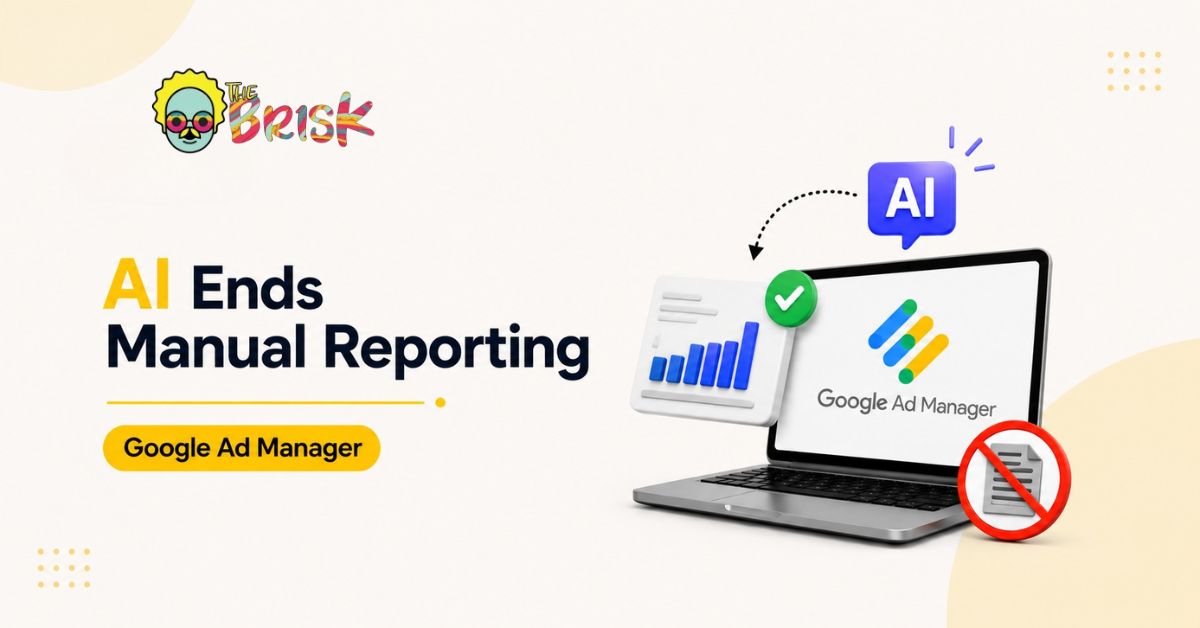
Google has now done exactly that. The company has launched an AI-powered assistant directly inside Ad Manager — one that doesn’t just answer generic help-center questions, but actually looks at your specific account data to tell you what’s going on and what to do about it. It’s called Ask Ad Manager, and it’s powered by Gemini.
What Do You Mean By “Ad Manager” and “Ask Ad Manager”?
Google Ad Manager is the platform publishers use to manage and sell their ad inventory — everything from setting up line items and pricing to running header bidding auctions across multiple demand sources. It’s the infrastructure layer that sits behind a huge share of the web’s programmatic advertising, and it has historically required real technical fluency to use well.
Ask Ad Manager is the new conversational layer Google has placed on top of that complexity. Instead of manually generating reports and sifting through data to figure out why a line item isn’t performing, publishers can now simply ask. The assistant examines each advertiser’s individual account data, so its answers are specific to that account rather than generic troubleshooting advice pulled from a help doc.
What Was It Earlier?
Before this, troubleshooting inside Ad Manager followed a familiar, frustrating pattern: notice a problem, generate a report, interpret the data yourself, click through several menus to find the relevant settings, and repeat until you isolate the cause.
Google’s help documentation existed, but it was generic — built to explain how features work in general, not to diagnose what’s specifically wrong with your account at this moment.
This wasn’t unique to Ad Manager. It mirrors a broader pattern across most ad tech platforms: powerful tools, dense interfaces, and a heavy reliance on the user’s own expertise to connect the dots between symptoms and causes.
What’s Changing Now?
Ask Ad Manager flips that workflow. Publishers can ask follow-up questions in a conversational thread, the same way they might query any AI chatbot, but with the added context of their own live performance data. Google describes the experience as one where the assistant surfaces insights and guidance, and lets you dig deeper with natural follow-up questions rather than starting a new report from scratch each time.
It goes a step further than just answering questions, too. Each response includes contextual deep links that load the right filters and settings inside Ad Manager automatically, based on what was discussed in the conversation — so instead of clicking around trying to remember where a setting lives, the tool takes you there directly. The system can also generate reports with multiple parameters on request, combining several data points that would otherwise require separate manual pulls.
Why Does The Timing Matter?
This launch doesn’t exist in isolation — it’s part of Google’s much larger push to embed Gemini across its entire advertising stack. Google has been steadily rolling AI assistance into Google Ads, Performance Max, Search Console, and now Ad Manager, treating conversational AI less like a feature and more like the new default interface for navigating its products.
It also reflects a broader shift in how people, generally, prefer to interact with software. The rise of conversational AI tools has trained users to expect to simply ask a question and get a direct answer, rather than hunting through documentation or dashboards.
Ad Manager’s complexity — header bidding, yield management, multiple demand partners, granular targeting — makes it a particularly good candidate for this kind of interface.
What’s The Future Impact of Ask Ad Manager?
For publishers, especially smaller teams without dedicated ad ops specialists, this could meaningfully lower the skill floor required to run a healthy, well-optimized ad stack. Issues that used to require escalating to a more senior ops person, or waiting on a support ticket, may now be resolvable in minutes through a guided conversation.
There’s a flip side worth naming, too. Leaning on an AI assistant to interpret complex revenue and yield data carries some inherent risk — Gemini’s recommendations are only as good as its read of the account context, and publishers will need to develop a healthy habit of verifying suggestions rather than accepting them blindly, particularly for high-stakes changes to pricing or floor settings.
What Should We Do As Marketers and Publishers?
- Start using Ask Ad Manager for diagnostics first, not strategic decisions. It’s a strong fit for “why is this line item underperforming” type questions; treat anything touching pricing strategy or yield optimization with more scrutiny.
- Use the contextual deep links as a learning tool. If you’re newer to Ad Manager, following where the assistant routes you is a fast way to build familiarity with the platform’s settings without memorizing menu structures.
- Don’t skip human review on consequential changes. AI assessments are a starting point for investigation, not a final verdict — especially anything that could affect revenue at scale.
- Watch for this pattern spreading. If Google is embedding conversational AI into Ad Manager, expect similar copilots to deepen across Google Ads and other publisher- and advertiser-facing tools in the near term.
What Should We Keep An Eye On?
- How accurate Ask Ad Manager’s recommendations prove to be across edge cases and unusual account configurations, not just straightforward troubleshooting scenarios.
- Whether Google expands a similar assistant to the advertiser side of its ecosystem (inside Google Ads itself) with the same depth of account-specific context.
- How Google handles data privacy and access controls as more account-level data gets fed into an AI system for analysis.
- Whether publisher teams begin restructuring ad ops roles around AI-assisted workflows, and what that means for the skills publishers will hire for going forward.
Ask Ad Manager is a small, practical feature on its face — but it’s also a clear signal of where Google wants every part of its ad business to head: less manual digging, more conversational problem-solving, and AI increasingly positioned as the default first stop for anyone managing complexity inside Google’s ad platforms.
The Bottom Line
If you’re running Ad Manager and still pulling manual reports to chase down a revenue dip, you’re doing it the hard way. Open Ask Ad Manager today, ask it about your lowest-performing line item, and see what it surfaces — then verify the suggestion before you act on it. Worst case, you learn nothing new. Best case, you just saved yourself an afternoon.
Sources referenced: Social Media Today, Google’s official Ad Manager product blog.



No Comments