Table of Contents
Google Local Services Ads sit at the very top of the search results page — above traditional Google Ads, above the local pack, above every organic result. On mobile, where the majority of local service searches happen, LSAs can fill the entire visible screen before a user scrolls at all.
According to SERP tracking data from BrightLocal and Semrush, the presence of LSA packs on mobile search results jumped from under 3% of tracked queries to nearly 22% between November 2025 and January 2026.
If you run a service business and are not using LSAs in 2026, you are invisible at the exact moment high-intent customers are deciding who to call.
This guide covers everything: what LSAs are, every major change made to the platform since 2024, how ranking works, what it costs, how to set up your campaigns correctly, and how to optimise for more leads at a lower cost per lead.
What Are Google Local Services Ads and How Are They Different from Regular Google Ads
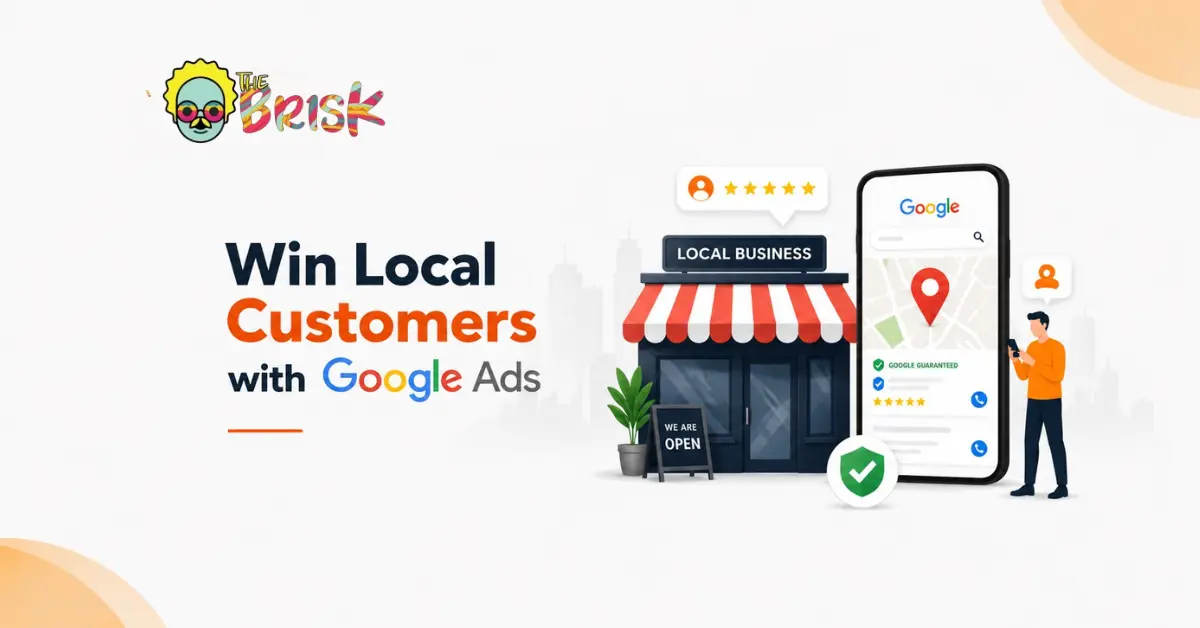
Google Local Services Ads are a pay-per-lead advertising format that connects local service businesses with customers actively searching for their services on Google. They appear at the very top of search results, carry a verification badge, display your business name, star rating, service area and years in business, and include a direct click-to-call or click-to-message button.
The pay-per-lead model is what fundamentally separates LSA from everything else Google sells. With traditional Google Ads, you pay per click — whether that click becomes a lead is entirely your problem.
LSA charges you only when a qualified lead contacts you directly through the ad: a phone call, a voicemail, a direct message, or a booked appointment. If someone sees your ad and does not contact you, you pay nothing.
The commercial difference compounds quickly. Q1 2026 benchmark data from SearchLight, tracking $6.72 million in LSA spend across 888 contractors and 126,650 leads, puts the average cost per lead for home services LSAs at $53.
Traditional Google Ads for the same businesses in the same period averaged $104 blended and $149 for non-branded campaigns. LSA generates leads at roughly half the cost on a blended basis.
Beyond cost, LSA leads arrive with different intent. A person who clicks a call button inside an LSA at 9pm because their pipe is leaking is in active purchase mode. They have not read an article, browsed a website, or filled out a form.
They are ready to book. The booking rate data reflects this: the industry average across home services LSA leads is 43.9%, with top-performing businesses consistently above that threshold.
Every Major Google LSA Change Since 2024 That Affects Your Campaigns Today
The platform has gone through more structural changes in the past 18 months than in the preceding three years. If your knowledge of LSA is from 2023 or early 2024, you are operating on outdated assumptions.
The AI Lead Credit System Replaced Manual Dispute Process (July 2024)
Prior to July 2024, disputing an invalid lead involved a manual process — you flagged it, Google reviewed it, and a credit was issued if the lead was ruled invalid. That process was removed in August 2024. The “Report a Problem” button is gone.
In its place, Google introduced an AI-driven automated system. When you receive a lead, you are prompted to rate its quality. The AI system scans call recordings within a 72-hour window and automatically issues credits for leads it determines to be spam, robocalls, or clearly invalid.
The frustration among advertisers has been real: many report the automated system credits fewer borderline leads than the manual process did. The practical response is to engage with the quality rating consistently.
The AI system learns from your quality feedback signals over time. Businesses that rate leads promptly and accurately receive progressively better lead quality. Businesses that ignore the rating prompts get whatever the system defaults to.
Google Business Profile Became Mandatory for All LSA Campaigns (November 2024)
From November 2024, a linked and verified Google Business Profile became a hard requirement to run Local Services Ads. No GBP, no LSA campaigns.
More significantly, if your GBP experiences a problem — suspension, verification lapse, policy flag — your LSA campaigns pause automatically. The two systems are now formally interdependent. A GBP suspension caused by something as common as an inconsistent business name format across local citations, an address change that has not fully propagated, or a review flag can take your paid lead generation channel offline without warning.
Keeping your GBP clean, verified, and current is no longer just good local SEO practice. It is a prerequisite for your LSA campaigns functioning at all.
The LSA Mobile App Was Retired (January 2025)
The dedicated Local Services Ads mobile app was shut down on January 6, 2025. All campaign management moved to the Local Services tab within the Google Ads platform. If you or anyone on your team was managing campaigns through the app, access needs to be set up through Google Ads instead.
The Google Ads platform offers more detailed reporting than the app did, including the ability to view phone lead costs and message lead costs separately — a reporting capability introduced in 2025 that gives a cleaner picture of how different lead types perform.
All Reviews Now Come from Google Business Profile (July 2025)
This is the most significant structural change of 2025, and many businesses are still not fully adapted to it.
Prior to July 11, 2025, Local Services Ads had their own separate review system. Reviews left specifically through LSA were stored separately in the LSA platform. From July 11, that system ceased to exist. All LSA reviews now come exclusively from your Google Business Profile. The separate LSA review system is gone.
The consequences are immediate and cascading:
Every review request you send to customers must now direct them to your Google Business Profile. Any LSA-specific review links from before the migration no longer work. If you use automated review request sequences, every link in those sequences needs to be updated to your GBP link.
Your GBP star rating and review volume now directly and mechanically impact your LSA ranking and visibility. More reviews, more recent reviews, higher ratings — these all feed directly into how prominently your LSA ads appear.
On the positive side: you are no longer splitting your review strategy across two platforms. Every review you generate now serves your organic local search presence and your LSA ranking simultaneously. One link, one platform, compounding value.
Google Replaced the Guaranteed and Screened Badges with Google Verified (October 2025)
On October 20, 2025, Google retired three trust designations — Google Guaranteed, Google Screened, and License Verified by Google — and replaced them with a single unified Google Verified badge. The badge is blue, replacing the old green Google Guaranteed checkmark.
The consumer money-back guarantee programme that made the Google Guaranteed badge distinctive — where Google would reimburse customers up to a defined amount if a verified business caused problems — was discontinued on November 7, 2025.
For advertisers who already held any of the previous badges, the transition was automatic. No action was required. Your verified status transferred.
What the change means operationally: the badge now needs maintenance. Licenses and insurance certificates expire. Google has confirmed it plans to expand badge visibility to more map and voice search surfaces, which makes keeping your verification documents current increasingly important. Mark the renewal dates for your business license and insurance well ahead of their expiry.
How Google Ranks Local Services Ads in 2026
LSA ranking is auction-based, but it is not a highest-bid-wins system. Google combines bid amount with a set of quality signals to determine who appears at the top, and the quality signals are where most of the practical optimisation work sits.
Review Volume, Rating, and Recency
Reviews are the single most directly controllable ranking input in LSA. According to Boomcycle’s 2026 LSA ranking factor analysis, businesses with 50 or more reviews and a rating of 4.5 or above consistently rank higher than those with fewer reviews or lower ratings. Beyond volume and rating, recency matters: a stream of fresh reviews signals ongoing business activity and consistent customer satisfaction.
The operational implication is a review request process that is systematic and permanent. After every completed job, every satisfied customer should receive a prompt directing them to leave a Google Business Profile review. This is not a launch activity — it is an ongoing operational habit.
The businesses with the highest LSA rankings in any competitive market almost invariably have the most active and consistent review generation processes.
Response Time and Answer Rate
Google tracks how quickly you respond to leads and how often you answer incoming calls, and it factors both signals directly into your ranking calculation.
The operational target is a response time under 15 minutes for all incoming leads. Google also tracks your call answer rate. Low answer rates — particularly for a trade category like plumbing or HVAC where calls come in at night and on weekends — signal low engagement to the algorithm and can increase your effective cost-per-lead over time because Google shows your ads less prominently.
After-hours coverage deserves specific attention. A significant proportion of high-value service calls, particularly in emergency trades, come outside standard business hours.
An answering service that captures after-hours calls and routes them immediately is one of the cheapest fixes with the biggest ranking and conversion impact available.
Profiles with strong reviews and response times under one hour can achieve 20-30% lower costs per lead, because Google preferentially shows these ads to higher-intent searches where contact is more likely.
Proximity to the Searcher
Google prioritises businesses geographically close to the person searching. For multi-location businesses, each location should have its own properly configured LSA and GBP, with service areas defined accurately. The proximity benefit only applies if Google knows precisely where your location is and what area it covers.
Ad Completeness and Profile Quality
A fully completed profile ranks higher than an incomplete one. This means: accurate and consistent business name, address, and phone number that matches your GBP exactly. Complete service descriptions. Current and correct business hours, including after-hours availability if applicable.
Professional photos of your actual work. Clearly defined service categories and service areas. Current licensing and insurance documentation.
Profile completeness is the lowest-effort ranking lever available. The gaps are fixable in an afternoon. Yet a significant number of LSA profiles have incomplete information that is silently costing them ranking position.
Bid Amount
Budget does matter. Google’s auction system factors in your willingness to pay per lead alongside the quality signals above. However, quality signals can meaningfully offset bid deficits: a business with stronger reviews and faster response times can outrank a higher-bidding competitor. Competing on quality rather than purely on bid is both more sustainable and more economical.
How Much Do Google Local Services Ads Cost in 2026
LSA cost-per-lead varies considerably by trade, market, and competition density. Here is what the 2026 benchmark data shows:
Home services national average: $53 per lead (SearchLight benchmark, Q1 2026, 888 contractors)
By trade category:
- House cleaning: $12–$30
- Landscaping: $20–$55
- Plumbing: $40–$90
- Electrician: $30–$75
- HVAC: $60–$120
- Roofing: $60–$130
- Water damage restoration: $80–$180
These are national averages and ranges. Your actual CPL will be shaped by your market size, competitor density, review count, and bid strategy. Smaller markets can see CPLs at the low end of or below their category range. Highly competitive metros can push CPLs well above it.
The downstream numbers that determine whether those CPLs make commercial sense: the average booking rate on LSA leads nationally is 43.9%, the average ticket across home services is $1,826, and the average closed return on ad spend is 7.84x. At those economics, a $53 lead generating a $233 cost per paying customer against an average $1,826 ticket is a straightforwardly profitable channel.
For budgeting, start with a weekly budget that allows for at least 5-10 leads per week — typically $200-$600 for most home services categories. This gives the algorithm enough data to optimise lead quality. Use Google’s “maximise leads” bidding strategy to begin. Adjust based on actual CPL and lead quality data after the first four weeks.
How to Set Up Google Local Services Ads: A Step-by-Step Process
Step 1: Verify Your Industry Eligibility
LSA is available for businesses in home services, healthcare, legal services, real estate, pet care, wellness, education and tutoring, beauty, and automotive services, among others. Availability varies by country and region. Go to ads.google.com/local-services-ads and search for your business category and location to confirm eligibility before beginning.
Step 2: Claim or Create Your Google Business Profile
Your GBP must be verified, public, and accurate before you can run LSAs. The business name, address, and phone number in your GBP must exactly match what you enter in your LSA profile. Any discrepancy can cause verification issues. If your GBP has outstanding issues — unverified status, pending flags, inconsistent information — resolve these first.
Step 3: Create Your LSA Account
Go to ads.google.com/local-services-ads and click “Get Started.” Create your profile with complete and accurate business information. Connect your verified GBP to your LSA account during setup.
Step 4: Complete Verification and Background Checks
Google’s verification process is industry-specific and requires current documentation. For home services trades, this typically includes your business license, relevant trade certifications, and insurance certificates. For trades with state-specific licensing, ensure your documentation is current for every state where you operate.
If your initial application is rejected, you have one opportunity to reapply within 30 days. A second rejection locks you out for a full year. Get your documentation together properly before submitting.
Step 5: Select Your Service Categories Precisely
Inside your LSA dashboard, choose the specific job types and service categories you want leads for. Specificity matters. Selecting every category in your industry creates noise and low-quality leads. Be precise about the jobs you actively want and exclude job types you do not offer.
Step 6: Write Clear Service Descriptions
Your service descriptions should be accurate, specific, and include trust factors relevant to your business — years of experience, relevant certifications, service guarantees. Avoid generic copy that could apply to any business in your category. Specific descriptions help Google match your ads to more relevant queries.
Step 7: Set Your Budget and Bidding Strategy
Start with a conservative weekly budget and Google’s “maximise leads” bidding strategy. Do not start with a large budget before you understand your lead quality and response capacity. Scale up once you have baseline data.
Step 8: Add Professional Photos
Upload real photos of your work, your team, and your equipment. Avoid stock photography. Profiles with genuine job photos see higher engagement rates than those with generic images. Before-and-after shots are particularly effective in visual trades.
Step 9: Set Up Your Review Request Process Before Going Live
This is not optional. The businesses with the most competitive LSA rankings in any market got there through consistent review generation over time. Before you launch, you need a documented process for requesting GBP reviews from every completed job. Set it up once, run it permanently.
How to Get More Reviews and Improve Your LSA Ranking
Reviews are the most controllable and most impactful ranking factor in LSA. Every additional review with a strong rating compounds your ranking advantage over competitors who are not collecting reviews as systematically.
The mechanics of an effective review request process:
- Timing: Send the request immediately after job completion, while the customer’s experience is still fresh. Same day, within hours if possible.
- Channel: Text message outperforms email for response rate in most service categories. A short personal message with a direct link to your GBP review form.
- Friction: The link should take the customer directly to the review form with as few clicks as possible. Any additional steps reduce completion rates significantly.
- Consistency: This needs to happen after every job, not just particularly good ones. The compound effect of systematic review generation over months and years is what produces 200+ review profiles that dominate local rankings.
- Responding to reviews: Google tracks whether you respond to reviews. Responding to every review — positive and negative — signals active engagement. For negative reviews, a thoughtful, professional response often converts a ranking negative into a trust signal that demonstrates customer care.
Common LSA Mistakes That Are Costing You Leads and Money
- Not linking your GBP correctly. If your GBP and LSA are not properly linked, your GBP reviews do not count toward your LSA ranking. This is one of the most common setup errors and one of the most expensive.
- Pausing campaigns during slow periods. The LSA algorithm needs consistent run time to optimise lead quality. Frequent pausing resets your learning data and reduces your ranking visibility when you resume. If you need to control spend, lower your weekly budget rather than pausing entirely.
- Low answer rate. If you are not answering calls, you are paying for leads and then discarding them. Worse, your ranking deteriorates because Google is tracking your answer rate. After-hours coverage is not optional in high-competition categories.
- Sending customers to old LSA review links. Post-July 2025, LSA-specific review links no longer work. Every review request needs to go to your GBP. If you have not updated your review request sequences since July 2025, fix this today.
- Over-broad service category selection. Including every possible category in your industry produces irrelevant leads. Be specific about what you want. The algorithm optimizes better with tighter category selection.
- Ignoring lead quality ratings. The quality rating system feeds directly into what leads Google shows you. Every unrated lead is a missed signal. Rate your leads consistently.
Google LSA vs. Traditional Google Ads
The answer for most eligible service businesses is both, but with different roles.
LSA captures high-intent, ready-to-book customers at the moment of urgent need. It performs best for emergency and time-sensitive services — plumbing, HVAC, electrical, locksmith — where the customer has a specific immediate problem and needs to contact someone now.
Traditional Google Ads performs better for services with a longer consideration cycle — landscaping, renovation, cleaning services, legal consultations — where the customer is researching options before committing.
Running both simultaneously does not create competition between your own ads. LSA and Google Ads operate independently and occupy different positions in the results. Using both maximises your total real estate at the top of local search results.
If budget forces a choice: for emergency and high-urgency service categories, LSA’s pay-per-lead model and premium placement makes it the higher-priority channel. For services with longer purchase cycles, Google Ads gives you more targeting control and reach.
What to Expect from LSA Performance in Your First 90 Days
- Week 1-2: Your campaigns go live but the algorithm has no data yet. Lead volume will be lower and lead quality more variable than it will be long-term. This is normal. Do not adjust bids or categories based on two weeks of data.
- Week 3-4: The algorithm starts learning from your response patterns, lead quality ratings, and booking rates. Lead quality should begin improving. Monitor daily.
- Month 2: You have enough data to make informed adjustments. Review your CPL against your category benchmark. Assess which service categories are producing the best lead quality. Consider whether your budget needs adjusting based on actual lead volume.
- Month 3: You have a baseline. Now you optimize. Refine service categories, adjust your budget based on what is working, and assess whether your review count has grown enough to move your ranking position against key competitors. Compare your booking rate to the 43.9% industry average and diagnose any gap.
The businesses that struggle with LSA economics almost always have an operations problem rather than a platform problem — low answer rates, slow follow-up, poor call handling. The platform delivers leads. Converting them is your responsibility.
Published by The Brisk. We help service businesses build paid media strategies that generate leads at economics that make sense. If you want a clear-eyed assessment of whether your LSA campaigns are performing as well as they should, we are worth a conversation.


No Comments