Table of Contents
Introduction
Understanding how your offline marketing campaign influences online behaviour is essential for accurate attribution and better decision-making — something you’ll learn deeper in our web analytics guide.
Even today, a large portion of marketing budgets goes into traditional media—TV, radio, newspapers, magazines, catalogues, retail stores, call centres, and more.
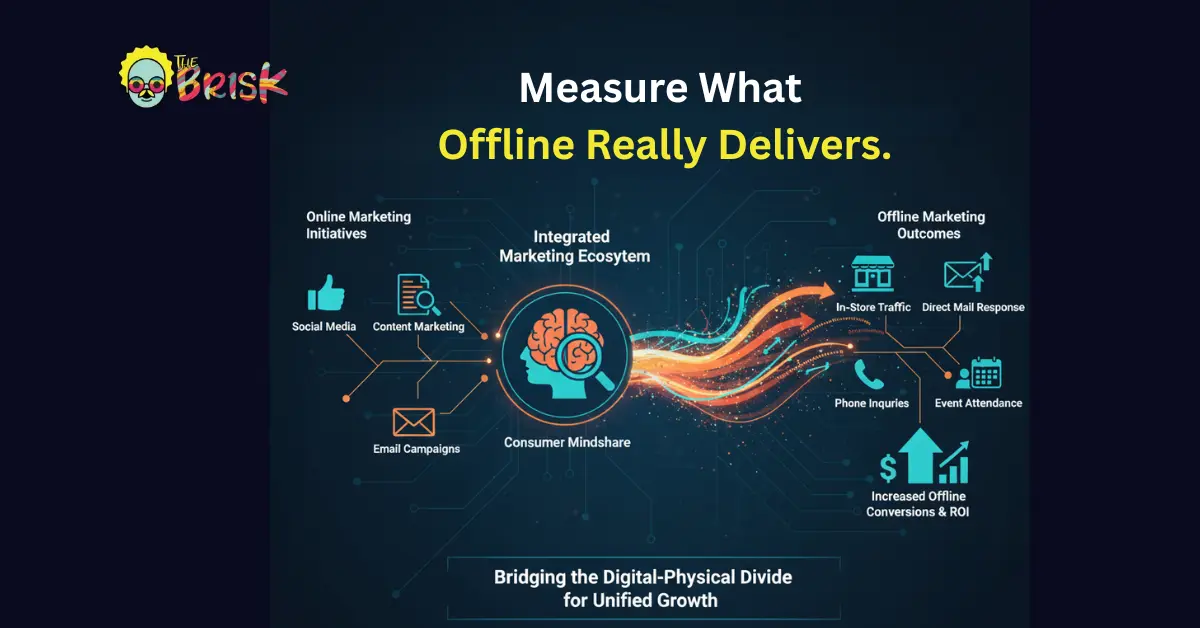
These offline touchpoints often trigger online actions, whether through direct visits, brand searches, or website lookups.
Although online channels are often more cost-effective, proving their value requires showing how, why, and for whom they work. And to do that, you must first understand the offline activities that push people online.
Did many users type your URL directly? Not always “direct traffic.” A significant percentage may have come through your offline marketing campaign without being properly attributed. The challenge is simple: offline sources rarely provide a clean, trackable primary key.
This blog explains practical, reliable methods to identify which offline actions bring users to your website—and how to analyse their online behaviour effectively.
1. Use Redirects or Vanity URLs
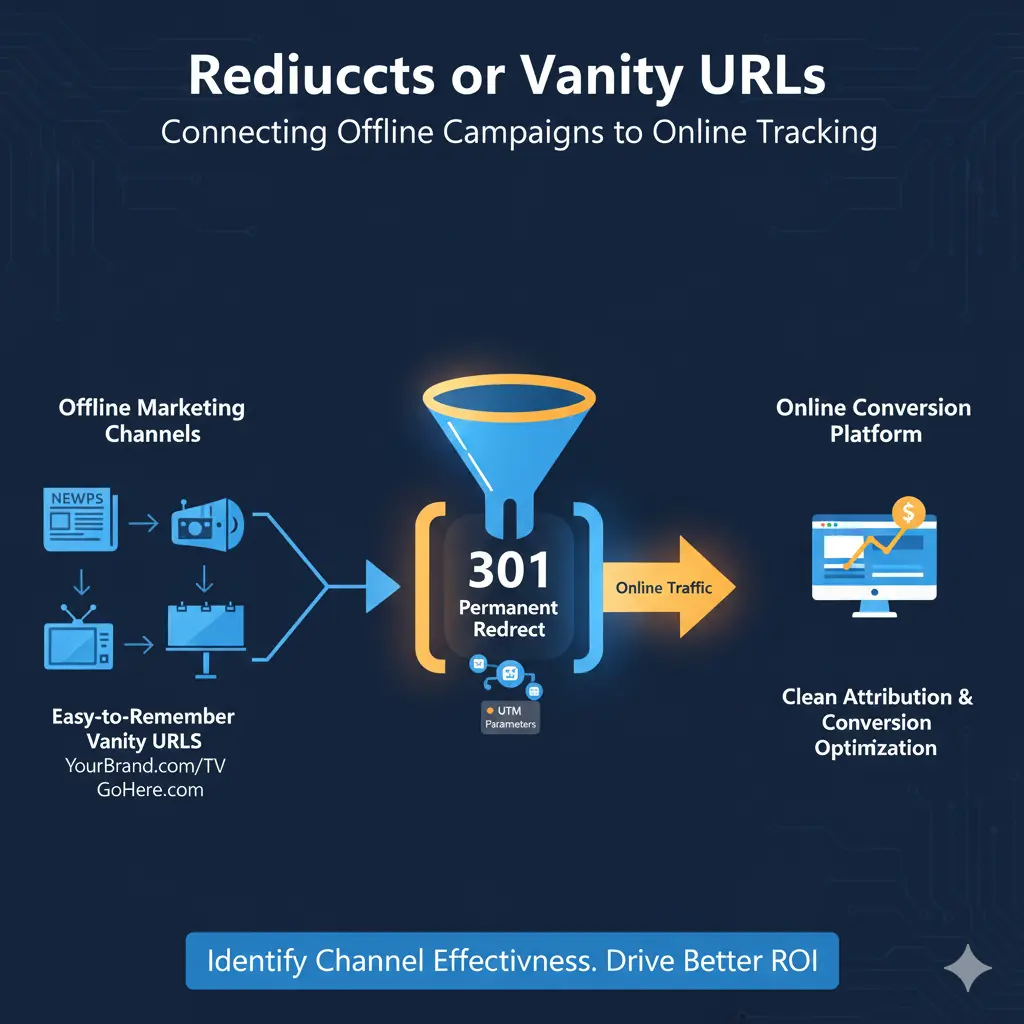
Vanity URLs are one of the simplest ways to track the online impact of an offline marketing campaign. They can be used in print ads, brochures, newspapers, billboards, TV ads, radio promotions, and even offline events.
For accurate tracking, ensure:
1. Your vanity URLs are easy to remember
2. They redirect using permanent 301 redirects
3. They include proper tracking parameters
This method helps you identify exactly which offline channel—TV, radio, catalog, bus ads, billboards—drove traffic to your site — a crucial step toward better conversion optimization. It provides clean attribution and a clear understanding of channel effectiveness.
2. Use Unique Redeemable Coupons or Offer Codes
Unique offer codes are widely used by multi-channel brands. These codes appear in offline media and are entered online during checkout or signup.
This helps you determine which offline marketing campaign motivated a visitor to take action and strengthens your overall digital marketing measurement framework.
Benefits include:
- Works well for TV ads, radio, newspapers, and catalogues
- Tracks users who prefer online or phone conversions
- Helps compare campaign performance by product type or region
Retailers successfully use this method to understand cross-channel preferences and customer behaviour.

3. Use Online Surveys to Identify Offline Influence
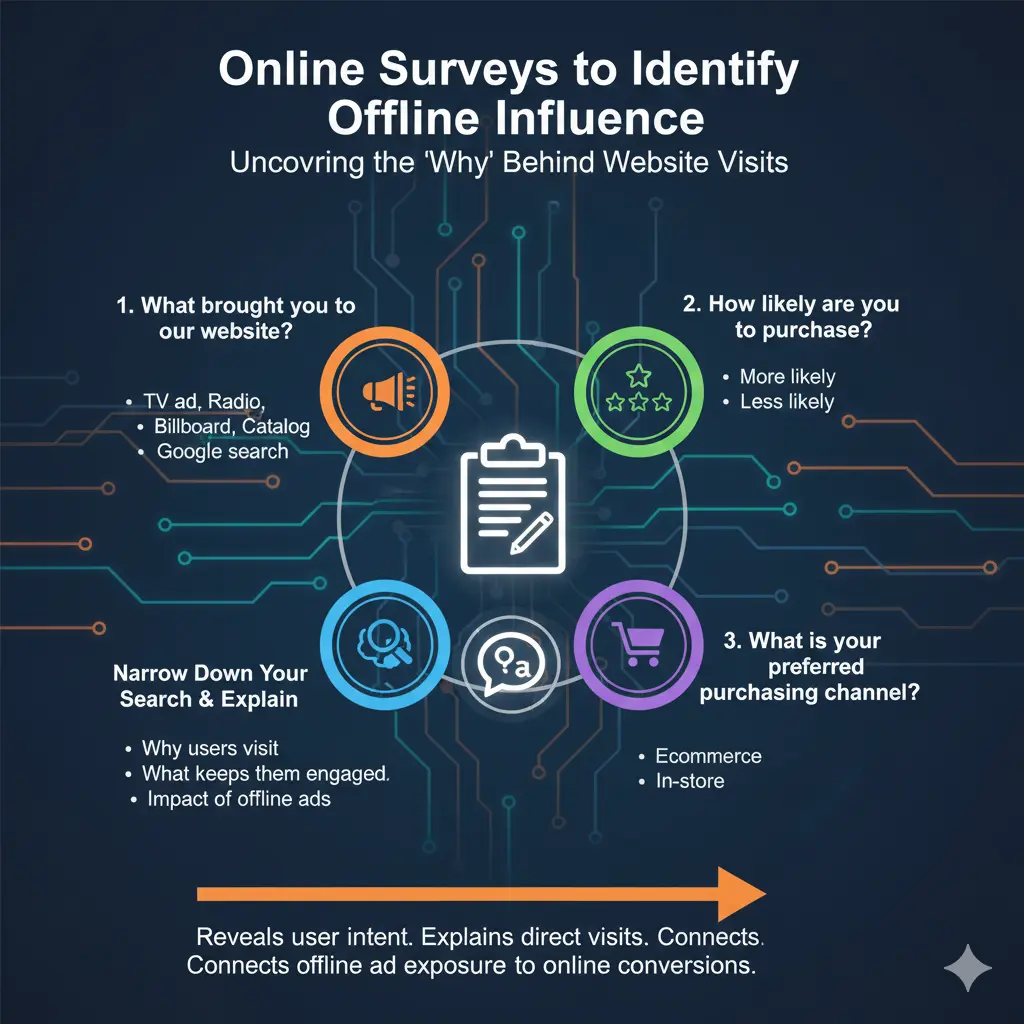
Online surveys remain one of the most accurate ways to understand user intent and the role of your offline marketing campaign.
Add simple questions such as:
1. What brought you to our website?
Options can include: TV ad, radio commercial, billboard, catalog, Google search, etc.
2. How likely are you to purchase after visiting our site?
The options will range from “more likely” to “less likely” and so on.
You can narrow down your search with these two multiple-choice questions. Explain not only what brings people to the website, but also what keeps them there.
This is where you might explain your incredibly high amount of “direct visits.”
3. What is your preferred purchasing channel?
Useful for e-commerce, tech support, and service-based industries.
This method reveals why users visit your site, what keeps them engaged, and how offline ads impact online conversions.
4. Correlate Traffic Patterns with Offline Ad Timings
Users often rush online after seeing offline ads. Yet many analysts miss the opportunity to correlate website traffic with offline media schedules.
Once you obtain the company’s media plan—TV timings, magazine placements, catalog drops, radio schedules—you can:
Analyse:
- Direct traffic spikes
- Increases in branded search volume
- Sudden organic/paid search surges
- New user sessions after offline exposure
Though correlation isn’t causation, matching traffic movements with campaign timings helps identify which offline marketing campaign drove measurable online engagement.
5. The Power of Controlled Experiments
Controlled experiments help determine the true impact of your offline marketing campaign by analysing user behaviour in a structured environment.
Effective experiments require:
- A large, rich dataset
- Complete user variable information without data restrictions
Synthetic datasets are sometimes created to simulate real-world behaviour when real data is incomplete. This offers flexibility in analysing patterns, adjusting variables, and validating offline-to-online attribution models.
By comparing exposed vs. non-exposed groups, you can accurately measure how offline efforts influence website visits, conversions, and search demand.
Conclusion
Analysing how online behaviour is influenced by your offline marketing campaign is no longer optional. With vanity URLs, coupon codes, surveys, traffic correlation, and controlled experiments, marketers can finally uncover the true value of offline channels.
These strategies help you track visitor flow, understand user intent, and measure conversions—transforming both online and offline efforts into a unified, data-driven strategy.
If you’re ready to explore detailed techniques, tools, and analytics methods, visit The Brisk to learn more about analyzing the online impact of offline marketing campaigns.




No Comments