Table of Contents
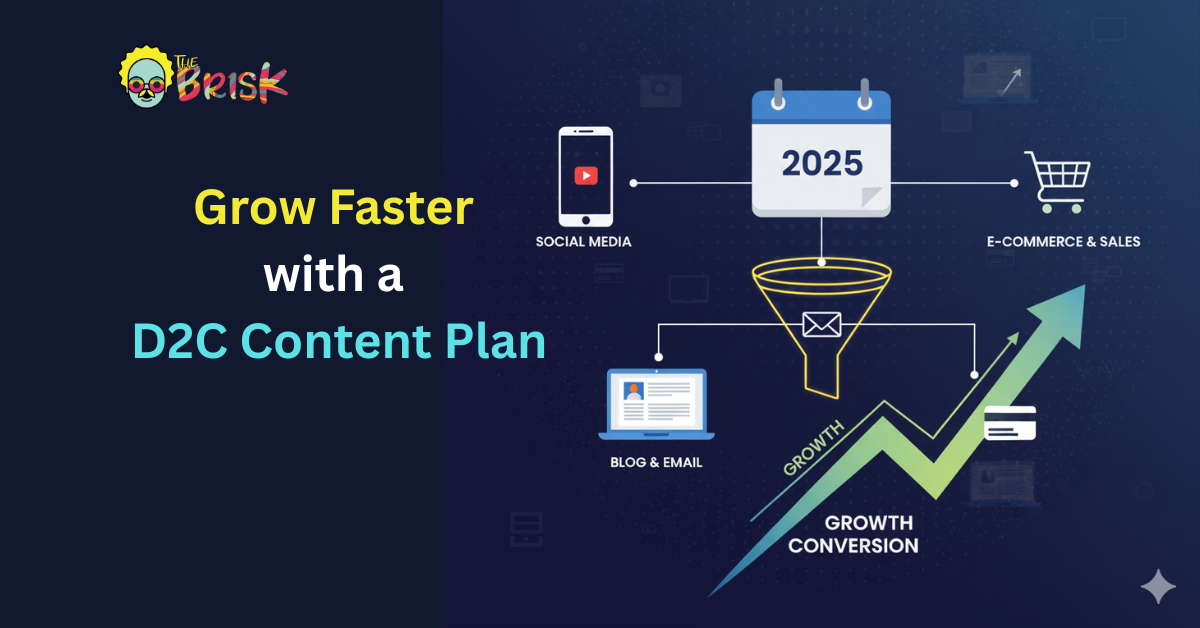
In today’s D2C (Direct-to-Consumer) landscape, your content calendar is not just a publishing schedule — it’s your growth engine.
Every post, video, email, and story you put out builds brand recall, shapes perception, and drives conversions. But without a strategic structure, even the most creative content gets lost in the digital noise.
This is where a growth-focused content calendar comes in — one that blends creativity with performance insights, aligning your brand storytelling with measurable outcomes.
Whether you’re a skincare brand launching new serums, or an apparel label entering festive season promotions, the right calendar helps you stay consistent, data-driven, and agile.
In this guide, we’ll break down the process of building a content calendar designed to fuel D2C brand growth, including the weekly planning framework, formats & channels, and toolkits that make execution seamless.
Why a Growth-Focused Content Calendar Matters for D2C Brands
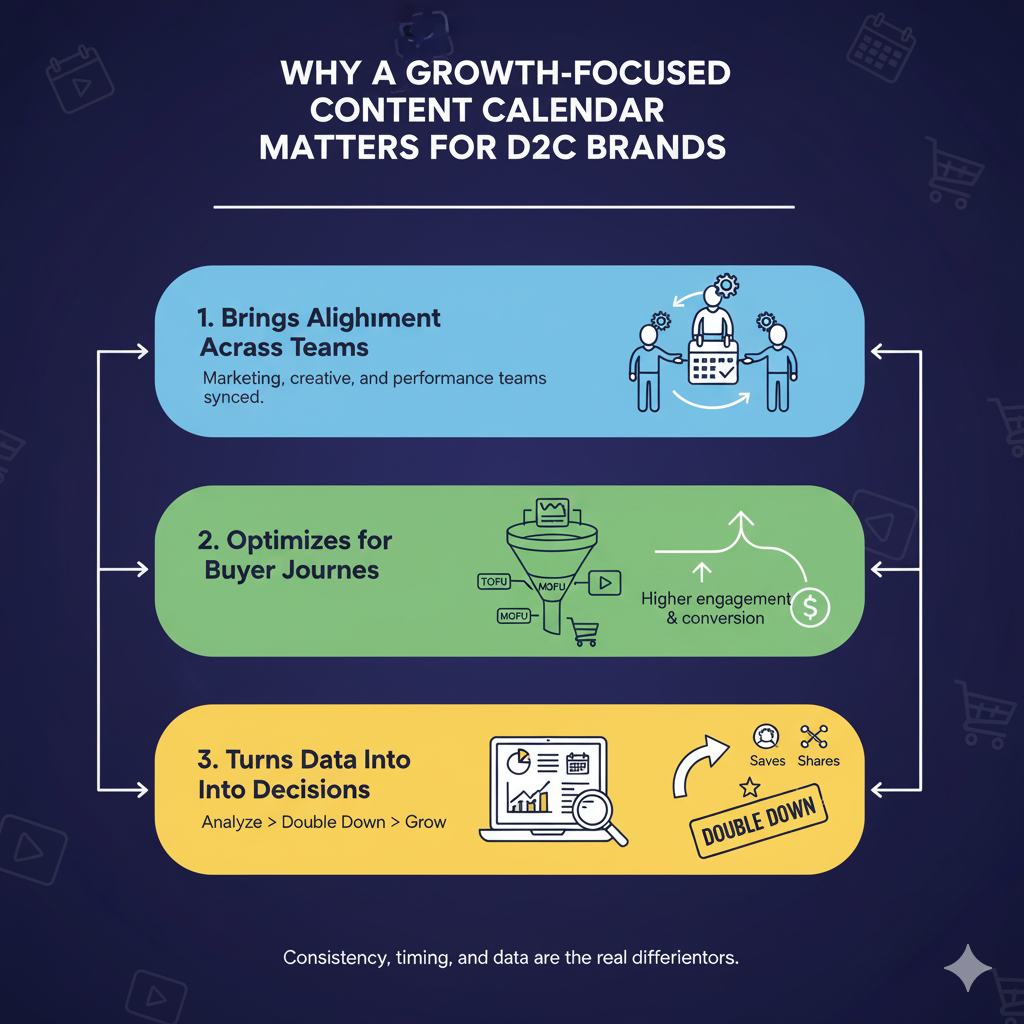
Most D2C founders start with a simple goal — get visibility and convert traffic. But as competition grows, consistency and timing become the real differentiators. A growth-focused calendar does three critical things:
- Brings Alignment Across Teams
Your marketing, creative, and performance teams stay on the same page — ensuring campaigns, product drops, and storytelling flow in sync. - Optimizes for Buyer Journeys
Every piece of content — from awareness (TOFU) to purchase (BOFU) — is mapped to user intent, ensuring higher engagement and conversion rates. - Turns Data into Decisions
Instead of posting randomly, you analyze what’s working (clicks, saves, shares) and double down with intent.
Step 1: Building the Foundation — Aligning Content Strategy with Growth
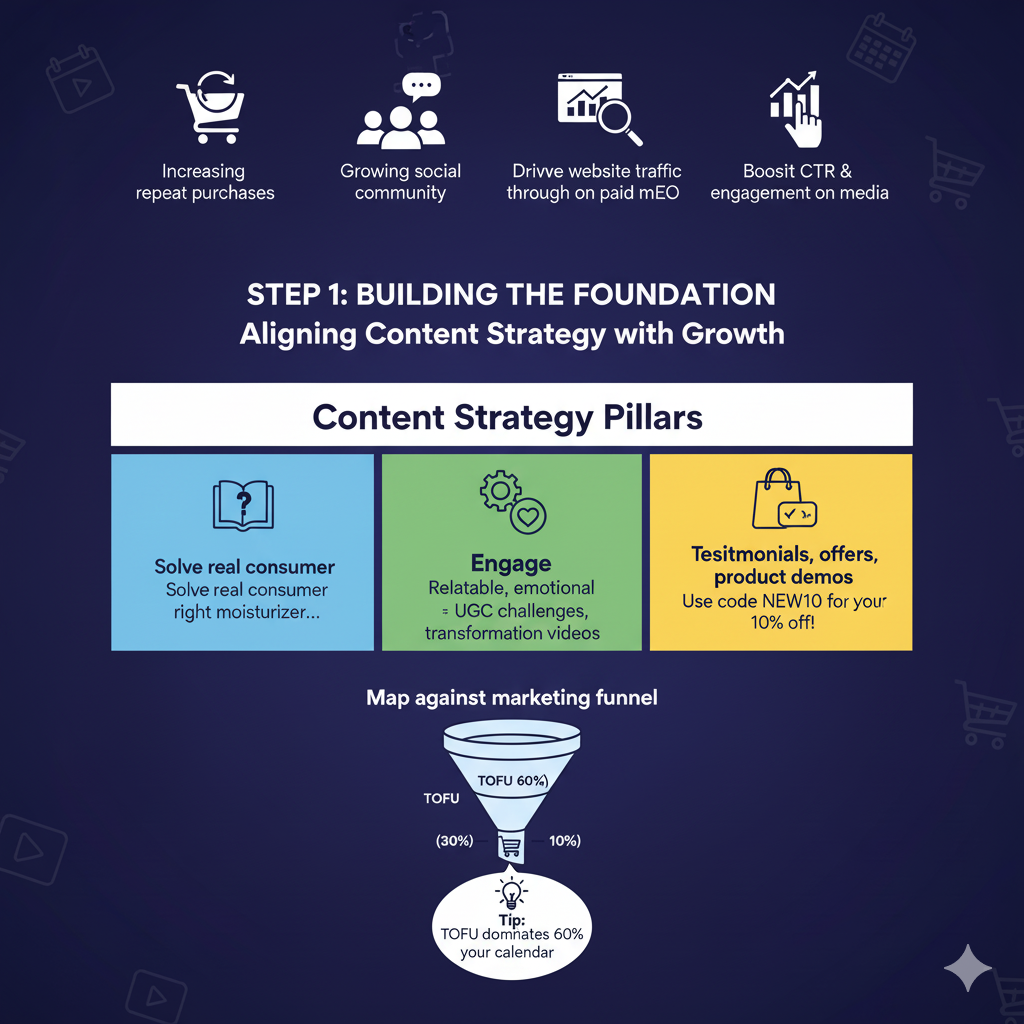
Before opening Excel or Notion, clarify your growth objectives. For D2C brands, these can range from:
- Increasing repeat purchases
- Growing social community
- Driving website traffic through SEO
- Boosting CTR and engagement on paid media
Now, structure your content strategy around three pillars:
- Educate – Solve real consumer problems. (e.g., “How to choose the right moisturizer for oily skin”)
- Engage – Create relatable, shareable, or emotional moments. (e.g., UGC challenges, transformation videos)
- Convert – Use testimonials, offers, and product demos that drive action.
Every content piece you plan should tie back to at least one of these objectives.
Tip: Map your calendar against your marketing funnel. TOFU content (education, storytelling) should dominate 60% of your calendar, while MOFU (reviews, product comparisons) and BOFU (offers, testimonials) fill the rest.
Step 2: Weekly Breakdown
To make your content calendar truly growth-focused, design it around weekly performance cycles.
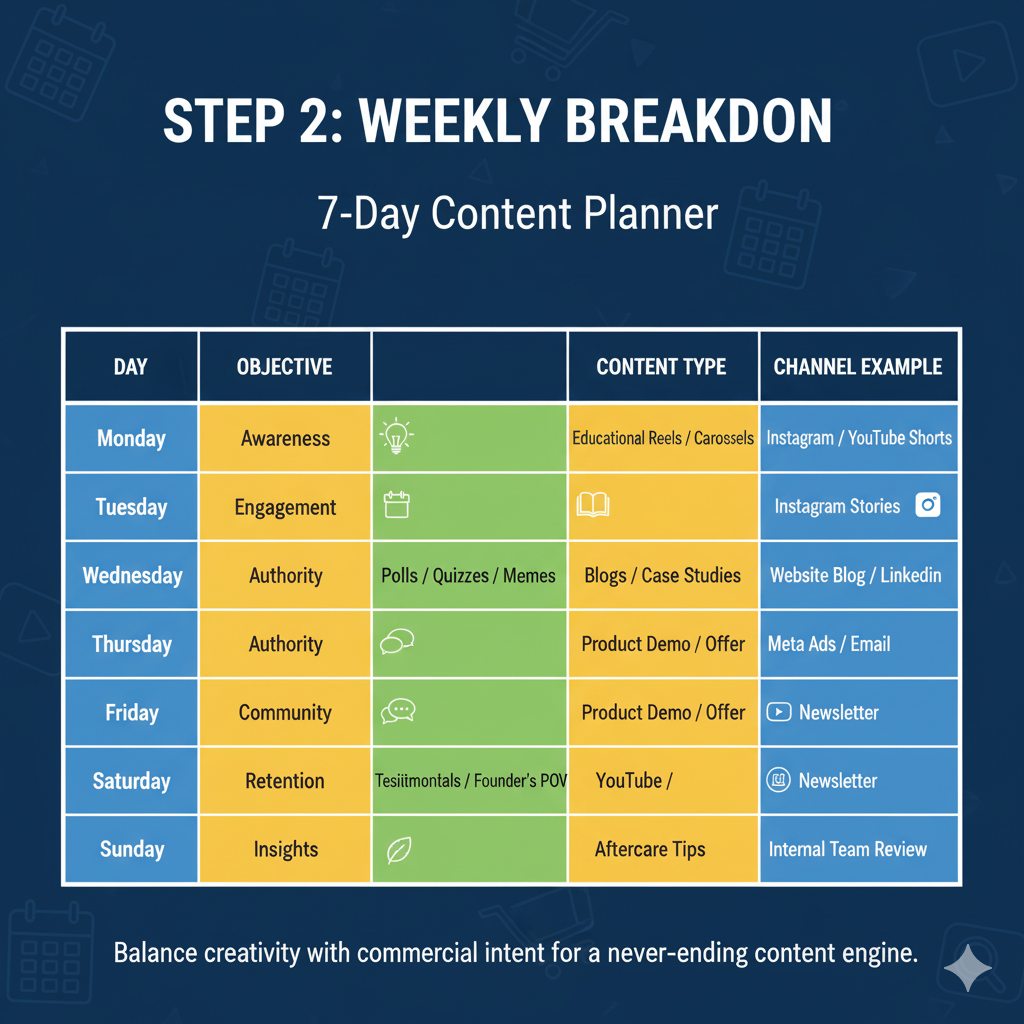
Here’s a proven breakdown you can follow:
| Day | Objective | Content Type | Channel Example |
| Monday | Awareness | Educational Reels / Carousels | Instagram / YouTube Shorts |
| Tuesday | Engagement | Polls / Quizzes / Relatable Memes | Instagram Stories / Threads |
| Wednesday | Authority | Blogs / Case Studies / Expert Tips | Website Blog / LinkedIn |
| Thursday | Conversion | Product Demo / Offer Post / UGC | Meta Ads / Email |
| Friday | Community | Customer Testimonials / Founder’s POV | YouTube / Newsletter |
| Saturday | Retention | “How to Use” videos / Aftercare tips | Instagram / YouTube |
| Sunday | Insights | Analytics Review / Content Optimization | Internal Team Review |
This framework ensures your content engine never burns out — balancing creativity with commercial intent.
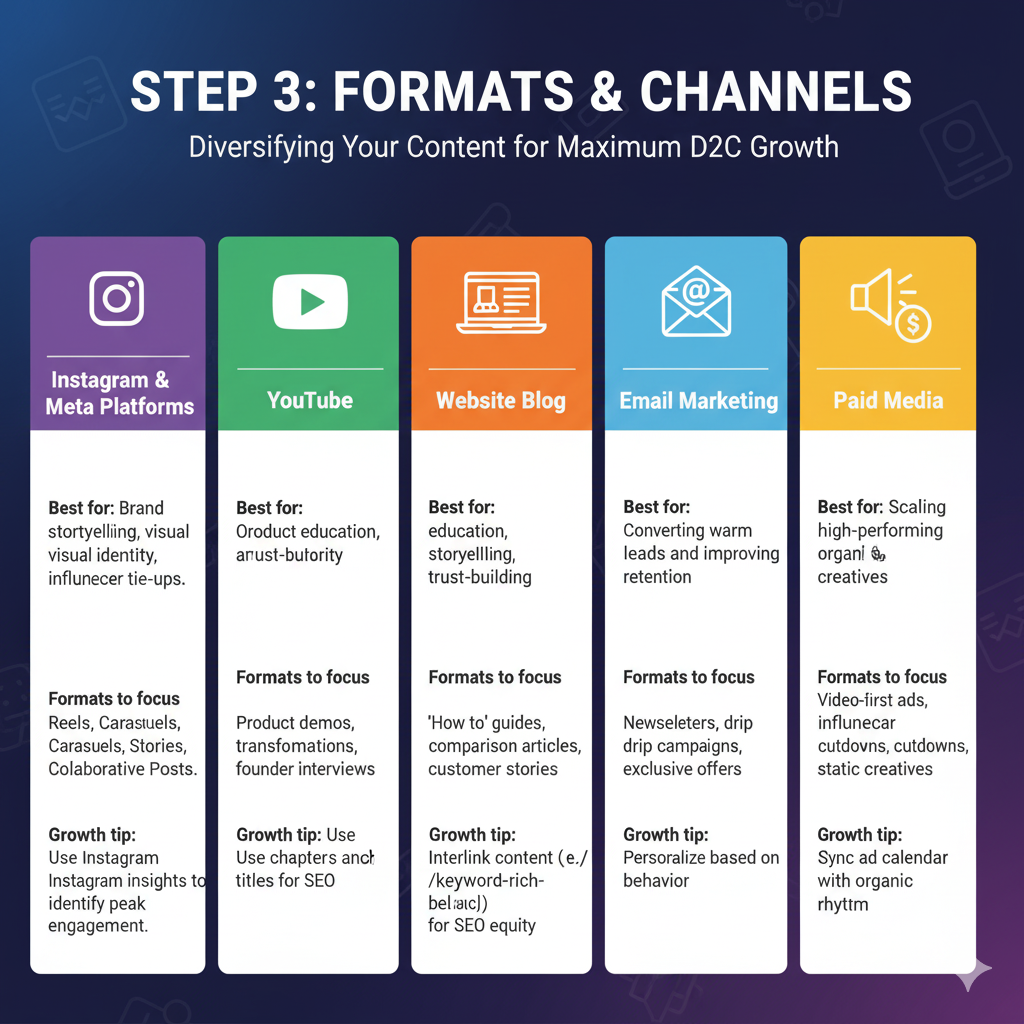
Step 3: Formats & Channels
Choosing the right formats and channels is the backbone of your calendar.
D2C audiences are omnichannel — consuming snackable reels on Instagram, detailed reviews on YouTube, and deep-dive blogs on Google.
Here’s how to diversify smartly:
1. Instagram & Meta Platforms
- Best For: Brand storytelling, visual identity, and influencer tie-ups.
- Formats to Focus: Reels, Carousels, Stories, and Collaborative Posts.
- Growth Tip: Use Instagram insights to identify peak engagement hours. Align posting times accordingly.
2. YouTube
- Best for: Product education, storytelling, and long-form trust-building.
- Formats to focus: Product demos, transformations, founder interviews.
- Growth tip: Use chapters and keyword-rich titles to boost SEO discoverability.
3. Website Blog
- Best for: Organic search visibility and authority building.
- Formats to focus: “How to” guides, comparison articles, customer stories.
- Growth tip: Interlink your content (e.g., /blog/content-strategy-d2c) for SEO equity and logical navigation.
4. Email Marketing
- Best for: Converting warm leads and improving retention.
- Formats to focus: Newsletters, drip campaigns, exclusive offers.
- Growth tip: Personalize based on purchase behavior and browsing history.
5. Paid Media
- Best for: Scaling high-performing organic creatives.
- Formats to focus: Video-first ads, influencer cutdowns, static performance creatives.
- Growth tip: Sync your ad calendar with your organic content rhythm to maintain consistency in storytelling.
Step 4: Toolkits — Build, Track, and Scale
Creating a content calendar is one part; maintaining it efficiently requires the right tools.
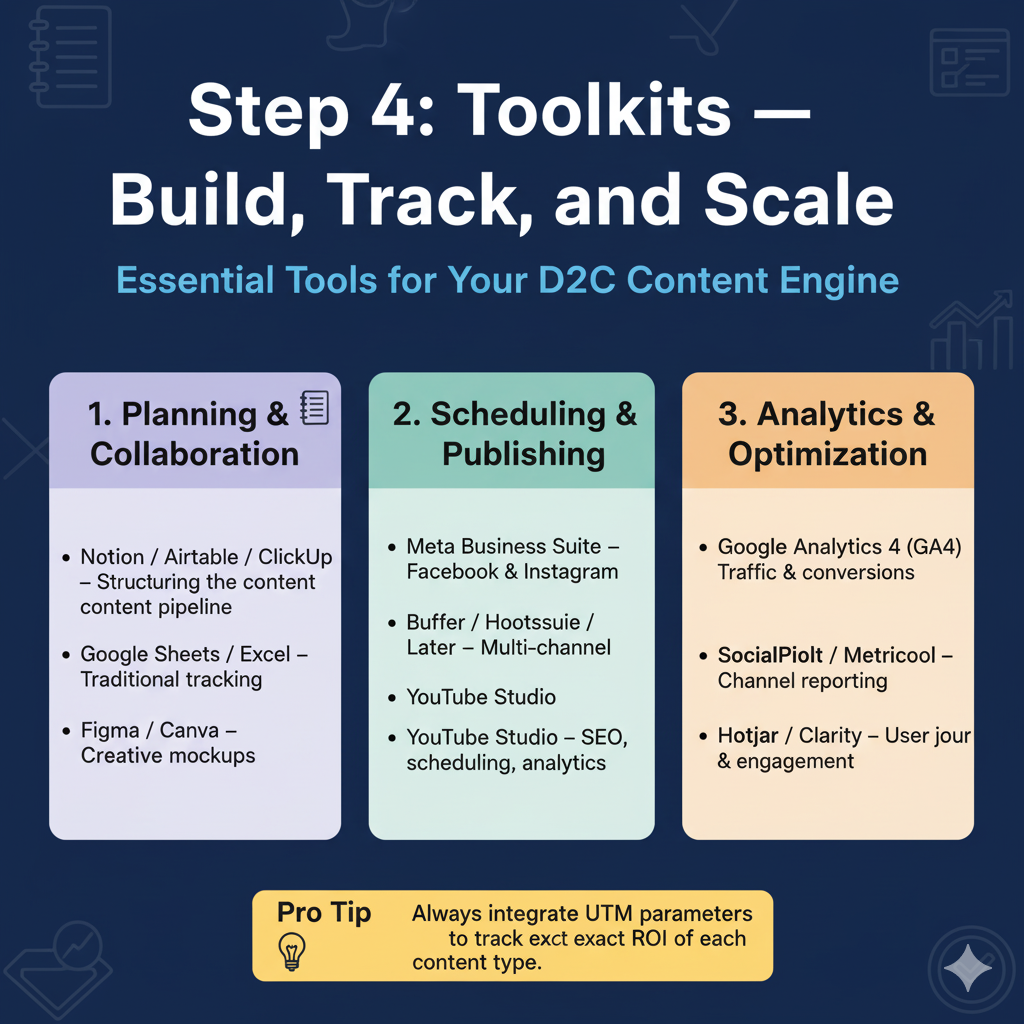
Here’s a toolkit designed for D2C marketing teams:
1. Planning & Collaboration
- Notion / Airtable / ClickUp – For structuring the content pipeline
- Google Sheets / Excel – For traditional tracking and collaboration
- Figma / Canva – For creative mockups and design collaboration
2. Scheduling & Publishing
- Meta Business Suite – Centralized scheduling for Facebook & Instagram
- Buffer / Hootsuite / Later – For multi-channel scheduling
- YouTube Studio – For SEO tagging, scheduling, and analytics
3. Analytics & Optimization
- Google Analytics 4 (GA4) – For traffic, behavior, and conversion insights
- SocialPilot / Metricool – For channel-wise performance reporting
- Hotjar / Clarity – To analyze user journey and content engagement
Pro Tip: Always integrate UTM parameters into your posts and stories to track exact ROI of each content type across channels.
Step 5: Review, Analyze, and Refine
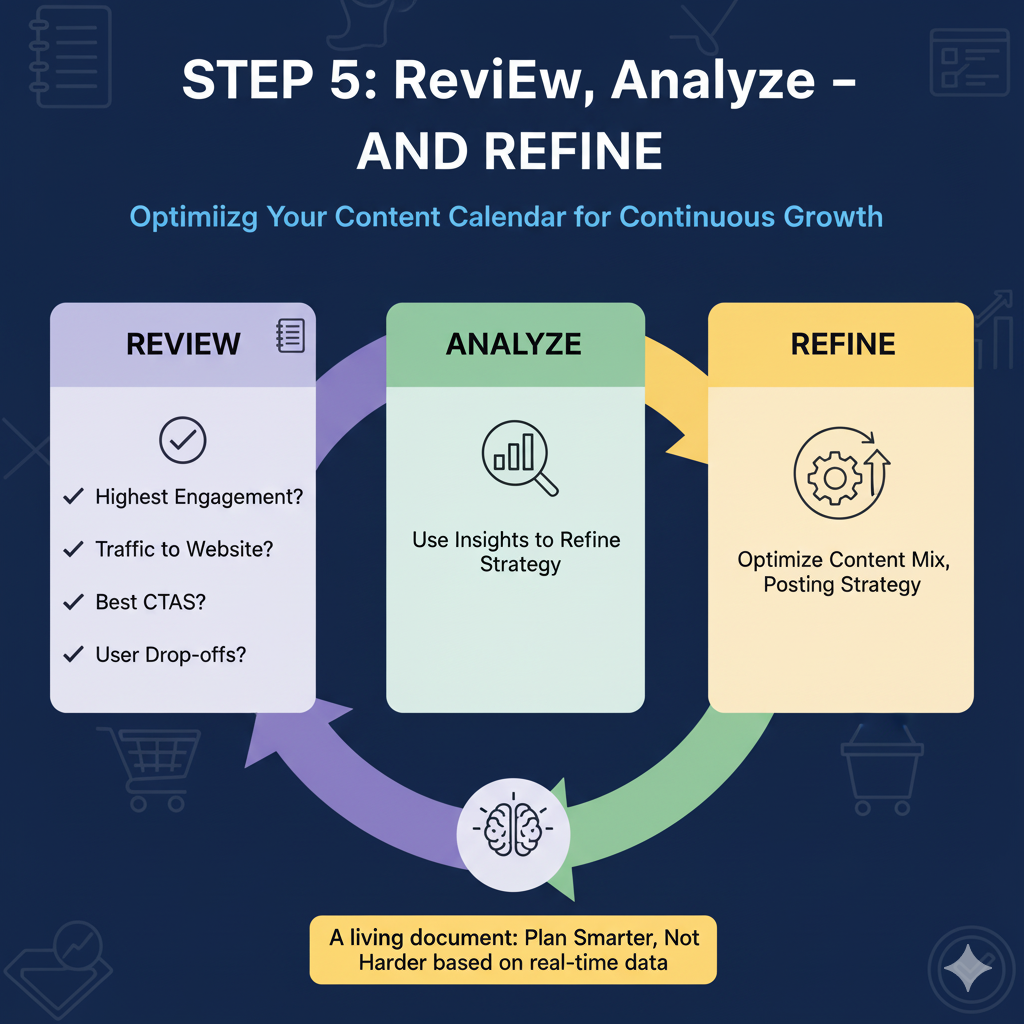
A growth-focused calendar isn’t static — it’s a living, breathing document.
Each week, run a quick content audit:
- Which formats got the highest engagement?
- Which posts drove traffic to the website?
- Which offers or CTAs converted best?
- Where did user drop-offs occur?
Use these insights to refine your content mix and posting strategy. Over time, you’ll start noticing patterns that define your audience’s real-time preferences — allowing you to plan smarter, not harder.
Conclusion
Building a growth-focused content calendar isn’t just about consistency — it’s about intentional consistency.
When your creative ideas are backed by audience insights, performance data, and a structured execution plan, your D2C brand doesn’t just grow — it compounds.
From weekly cycles to multi-channel formats and tracking toolkits, every layer of your calendar should speak the language of growth.
So, the next time you sit down to plan content, don’t ask, “What should we post?”
Ask — “What will move the brand forward this week?”



No Comments