Table of Contents
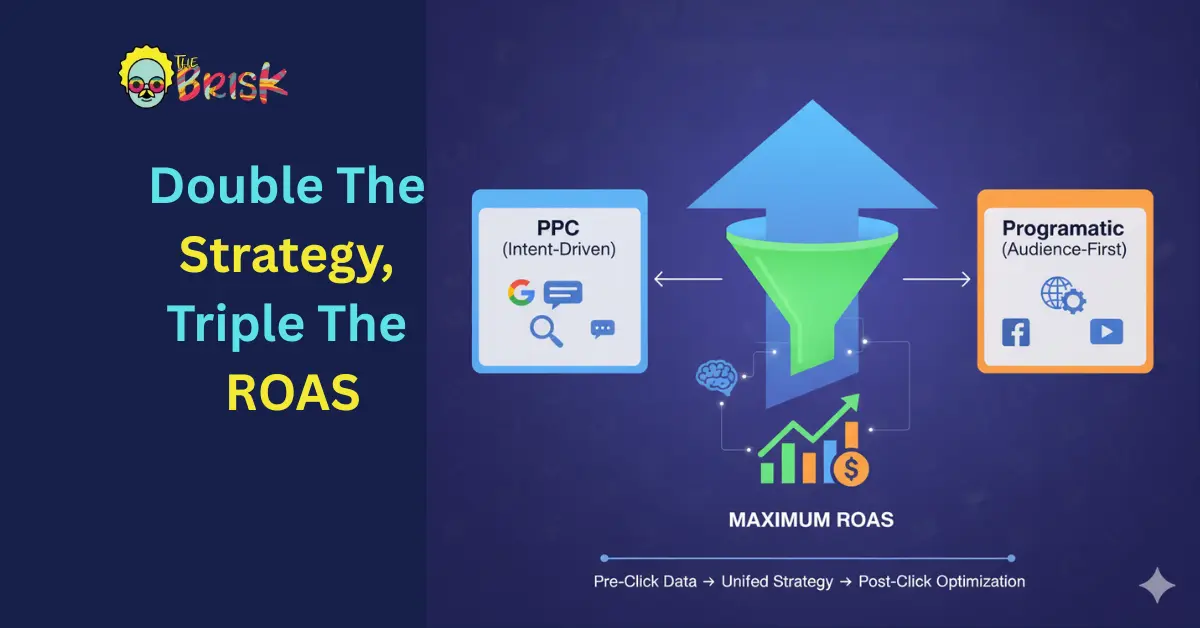
In digital advertising, ROAS (Return on Ad Spend) is the ultimate scoreboard. Every click, impression, and conversion counts — but what if you could align two of the most powerful paid media channels, PPC and Programmatic, to amplify every rupee spent?
That’s where the art and science of a hybrid media mix comes in. Let’s explore how blending intent-based PPC precision with programmatic reach and automation can transform your marketing strategy from fragmented to future-ready.
1. Understanding the Foundations
What is PPC (Pay-Per-Click)?
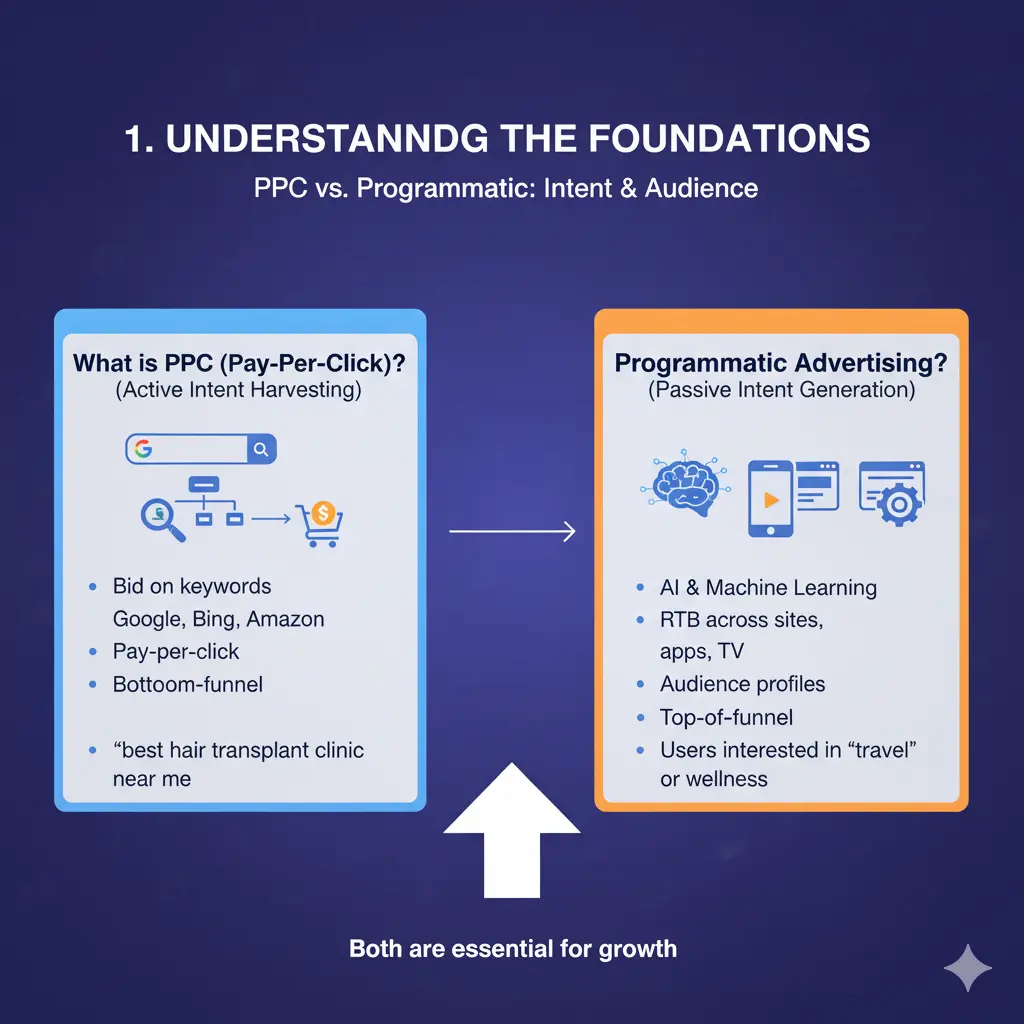
PPC is performance-driven advertising at its purest. You bid on specific keywords that your potential customers are typing into Google, Bing, or even Amazon. You pay only when someone clicks your ad — making it an ideal channel for bottom-of-funnel conversions.
For example, a person searching for “best hair transplant clinic near me” has already shown intent. PPC allows you to capture that user at the moment of decision-making.
What is Programmatic Advertising?
Programmatic is automation on steroids. It uses AI, machine learning, and real-time bidding (RTB) to buy ad inventory across thousands of websites, apps, OTT platforms, and even smart TVs. Instead of relying on manual keyword bidding, it focuses on audience profiles and behavioral signals — reaching users who are most likely to engage, even before they search.
Think of PPC as active intent harvesting and programmatic as passive intent generation. Both are essential for growth.
2. PPC vs Programmatic: The Core Differences
| Factor | PPC | Programmatic |
| Ad Placement | Search engines (Google, Bing) | Display, Video, Native, Audio, CTV |
| Targeting Method | Keywords and search queries | Audiences, interests, and behavior |
| Payment Model | Cost per click (CPC) | Cost per mille (CPM) or Cost per acquisition (CPA) |
| Goal | Conversion | Awareness and Retargeting |
| Control | Manual bidding | Automated bidding and optimization |
While PPC allows you to capture existing demand, programmatic helps you create new demand by increasing awareness and recall across the web.
Why Data-Driven Advertising Changed the Game
In the past, media buying was manual — marketers would negotiate ad space directly. Today, data has replaced guesswork. Platforms like Google DV360 or The Trade Desk use machine learning models to predict user intent, purchase likelihood, and engagement probability.
The result?
- Better personalization — every ad is tailored to a user’s journey.
- Faster optimization — algorithms learn from every impression.
- Greater scalability — you reach millions in milliseconds.
This shift makes it essential for brands to move beyond isolated PPC campaigns and embrace the programmatic layer for cross-platform visibility.
The Pros & Cons of Each Channel
Advantages of PPC
- Intent-Driven Traffic: You’re reaching users who are actively searching for solutions.
- Clear Measurement: Easy to attribute conversions through Google Ads and Analytics.
- Flexibility: You can test multiple ad copies and landing pages quickly.
Limitations of PPC
- High competition drives up cost per click (CPC).
- Search inventory is finite — you can’t scale infinitely.
- It’s less effective for brand discovery or top-funnel awareness.
Advantages of Programmatic
- Massive Reach: You can appear across millions of sites, videos, and OTT platforms.
- Hyper-Personalized Targeting: Data segments allow you to reach niche audiences.
- Creative Freedom: Supports dynamic ads, rich media, and video storytelling.
Limitations of Programmatic
- Needs larger budgets to access premium inventory.
- Measurement complexity — results often span awareness to conversions.
- Risk of ad fraud if not monitored via verified exchanges.
In short, PPC is precision; programmatic is presence. Together, they create balance.
Why You Should Combine PPC and Programmatic
Many marketers make the mistake of isolating their channels. This creates data silos, redundant targeting, and inefficient budget allocation. The truth is — PPC and programmatic complement each other perfectly.
- Programmatic builds awareness — educating new users about your brand through video and display.
- PPC captures intent — converting those users when they start searching.
This synergy allows you to nurture and capture the same user across multiple touchpoints — leading to higher conversion rates and improved ROAS.
When to Use Both: The Funnel Alignment Strategy
A unified media mix should align with your marketing funnel:
| Funnel Stage | Channel | Objective |
| Awareness | Programmatic (Display, Video, OTT) | Reach and educate potential customers |
| Consideration | Programmatic Retargeting + YouTube Ads | Nurture interest |
| Conversion | PPC Search + Shopping Campaigns | Drive immediate actions |
| Loyalty | Programmatic CRM Retargeting | Re-engage past buyers |
For example, a user who watched your programmatic video ad for a skincare brand might later Google “best acne solution”. A well-synced PPC campaign ensures your brand appears right there — closing the loop.
Crafting a ROAS-Optimized Media Mix
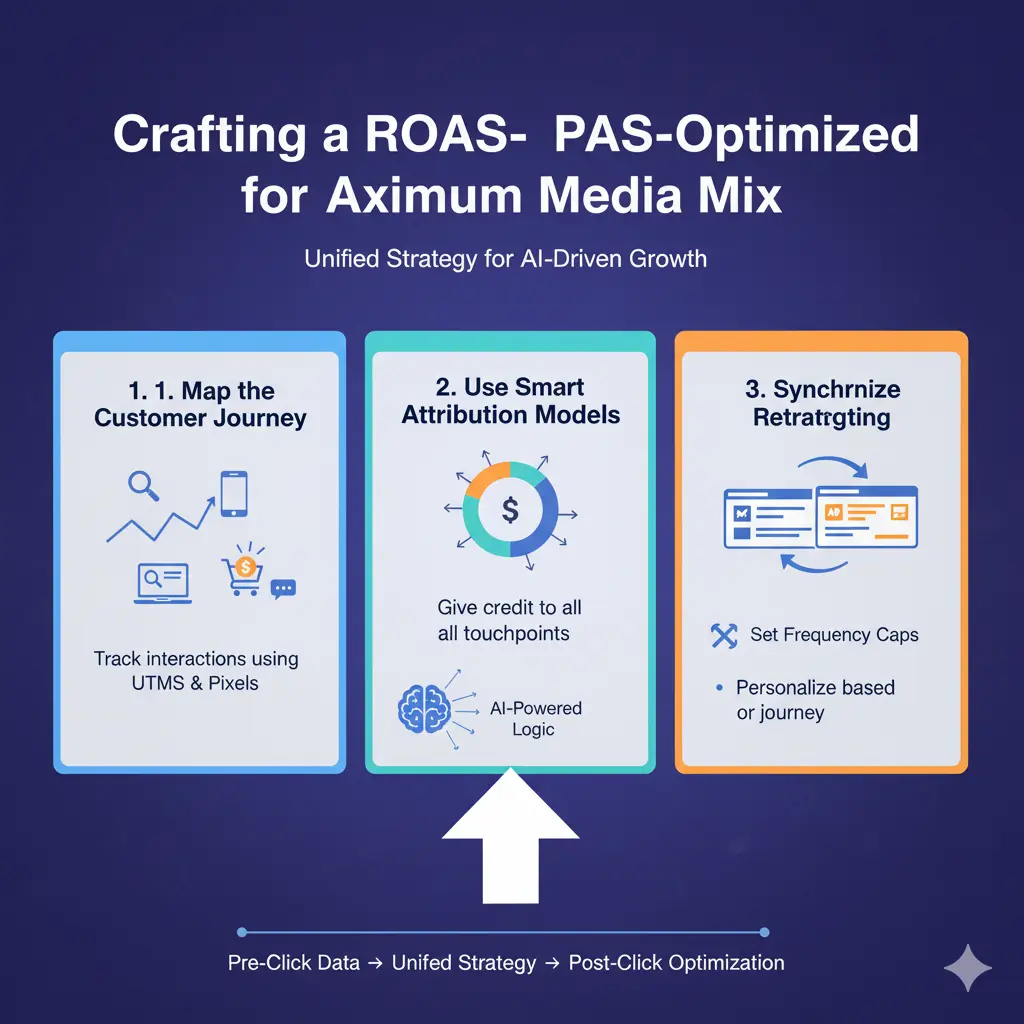
Step 1: Map the Customer Journey
Identify how your audience moves across platforms — from first impression to final purchase. Track every interaction using UTMs, CRM integrations, and cross-channel pixels.
Step 2: Use Smart Attribution Models
Ditch last-click attribution. Instead, use data-driven models that give credit to all touchpoints contributing to a conversion. This helps you allocate budgets more fairly between PPC and programmatic.
Step 3: Synchronize Retargeting
Set frequency caps and audience exclusions so users don’t see the same ad repeatedly. For instance, someone who clicked a PPC ad shouldn’t be retargeted with the same creative through programmatic — personalize the journey instead.
Key Metrics to Measure Success
To truly maximize ROAS, monitor metrics that reflect both performance and synergy:
- CTR (Click-Through Rate): Measures ad engagement.
- CPA (Cost Per Acquisition): Helps understand efficiency.
- View-Through Conversions: Captures users influenced by a programmatic ad but converted via PPC.
- Incremental Lift: Quantifies the real impact of programmatic on search volume.
- ROAS (Return on Ad Spend): The final benchmark of campaign success.
When both channels are tracked together, you get a complete picture of ROI instead of fragmented insights.
Case Study: D2C Brand Integration
A D2C beauty brand ran programmatic awareness campaigns through video ads while simultaneously targeting intent-driven keywords via Google Search.
- Within 45 days, search impressions increased by 38%, showing higher brand recall.
- Users exposed to programmatic ads converted 62% faster on PPC.
- Overall ROAS improved by 67% compared to running PPC alone.
The takeaway? Cross-channel synergy drives both awareness and conversions efficiently.
Avoid These Common Mistakes
1. Overlapping Audiences
If your PPC and programmatic platforms target the same audience without coordination, you’ll bid against yourself, inflating costs. Always use shared audience exclusions.
2. Poor Tracking Infrastructure
Without unified tracking (GA4, Floodlight, or CRM integrations), your data will never tell the full story. Clean data equals clear decisions.
3. Measuring in Isolation
Don’t judge PPC by conversions alone or programmatic by impressions alone. Combine the metrics to understand multi-touch influence.
Tools and Technologies for Seamless Integration
- Google Marketing Platform (GMP): Integrates DV360 with Google Ads.
- The Trade Desk: Provides advanced audience targeting and predictive modeling.
- Meta Advantage+ & LinkedIn Matched Audiences: Ideal for cross-platform retargeting.
- Supermetrics / Funnel.io: For consolidated performance dashboards.
- Zapier / HubSpot: Automates audience syncing and lead management.
With the right stack, managing PPC and programmatic together becomes data-driven, efficient, and scalable.
The Future of Paid Media Integration
AI-Driven Predictive Campaigns
AI will soon automate budget allocation across channels based on real-time performance signals — deciding in milliseconds where every dollar should go.
Privacy-First Marketing
With cookies fading, first-party data and contextual targeting will dominate. Brands that unify their CRM data with ad delivery systems will outperform others.
Media Mix Modeling (MMM)
This analytical approach will become standard for enterprise advertisers to measure cross-channel ROAS holistically rather than channel by channel.
Conclusion: From Fragmented to Full-Funnel
The era of running separate PPC and programmatic campaigns is over. Today, the brands that win are those that integrate — synchronizing awareness, intent, and conversion in a seamless user journey.
Think of it as a relay race:
- Programmatic passes the baton by creating awareness.
- PPC sprints ahead to capture conversions.
Together, they finish the race stronger — with maximum ROAS, efficiency, and scalability.
So the question isn’t “Which one should I choose?”
It’s “How fast can I make them work together?”
FAQs
1. What is the biggest advantage of combining PPC and programmatic?
It ensures your brand appears throughout the customer journey — from awareness to conversion — maximizing engagement and ROAS.
2. How can small businesses afford programmatic advertising?
Platforms like Google Display Network or StackAdapt now offer self-serve models starting with modest budgets.
3. How often should I optimize my media mix?
At least bi-weekly. Use campaign insights and attribution data to rebalance spend dynamically.
4. What attribution model works best for cross-channel analysis?
Use data-driven or position-based models to account for both awareness (programmatic) and conversion (PPC) touchpoints.
5. How can I reduce audience overlap between PPC and programmatic?
Use shared audience lists, CRM exclusions, and frequency caps to maintain control over exposure and avoid ad fatigue.


No Comments