Table of Contents
“Our community loves to share videos with their friends and family, and we want them to be able to do it in one place.” — YouTube Official Blog, June 10, 2026
YouTube is a platform with a sharing problem, not a sharing deficit, but a sharing destination problem. Every day, millions of YouTube videos are shared through WhatsApp, iMessage, Instagram DMs, Telegram, Discord, and dozens of other messaging platforms. People love sharing YouTube content. They just don’t do it on YouTube.
That behaviour has a real cost for YouTube. When sharing happens outside the platform, YouTube loses visibility into the social dynamics around its content. It can’t see who shared what with whom, what conversations developed around specific videos, or how social recommendations drive viewing behaviour. All of that data lives in other apps’ servers.
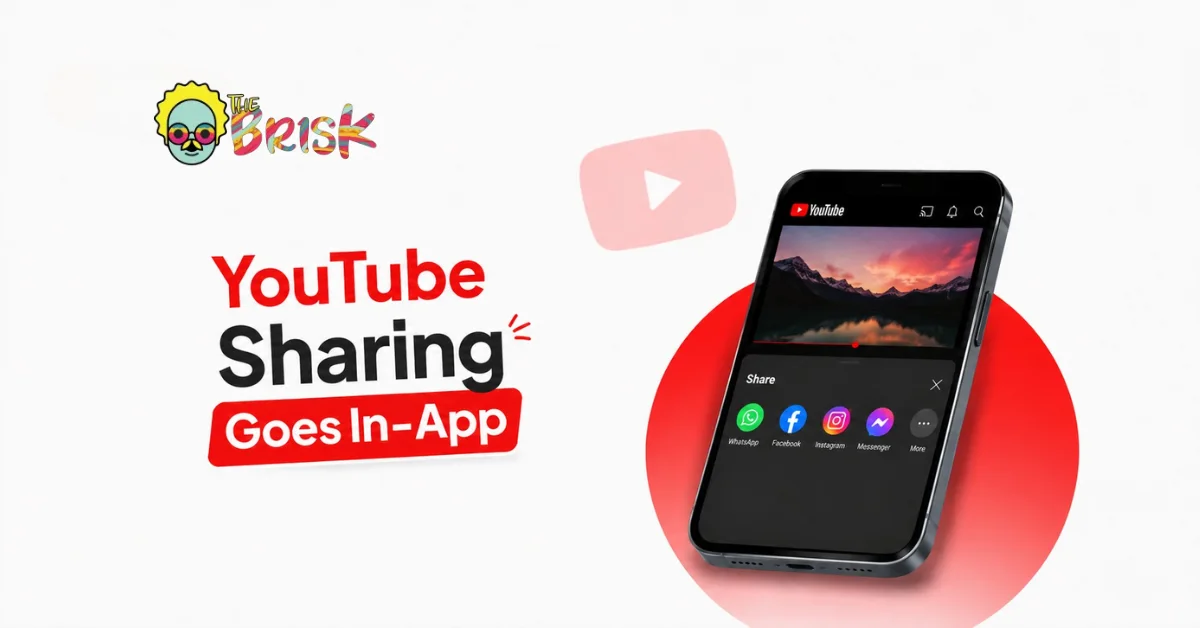
The newly launched YouTube Chat feature — now rolling out to the United States, United Kingdom, Brazil, Singapore, and other global markets — is YouTube’s attempt to bring at least some of that sharing activity back home.
It’s the platform’s second attempt at in-app messaging (the first ran from 2017 to 2019), and this iteration is noticeably more focused, more deliberate, and backed by a full year of successful testing in European markets.
For creators, marketers, and digital strategists, this launch raises several important questions: How does the feature actually work? What drove YouTube to revive it after abandoning it seven years ago?
What does it mean for engagement metrics and the recommendation algorithm? And what should content strategy look like in a world where YouTube is becoming — slowly, deliberately — a place where private video conversations happen?
A Brief History
YouTube’s original Messages feature launched in 2017, during a period when many platforms were experimenting with adding direct messaging as a strategy for increasing engagement and daily active use. Instagram had DMs. Twitter had DMs. Snapchat was built around them. YouTube’s version allowed users to share videos privately with other users within the app.
It was removed in September 2019. At the time, YouTube said it would “focus on improving public conversations” through comments, posts, and stories.
The subtext, broadly understood, was that the feature had failed to achieve meaningful adoption — users continued preferring to share YouTube links through the messaging apps they already used, and YouTube’s messaging interface wasn’t compelling enough to change that habit.
What’s different in 2026? The launch architecture is meaningfully different, the strategic context has shifted, and YouTube has the benefit of a year of real-world test data from European markets to validate the approach.
How YouTube Chat Actually Works
Understanding the mechanics of YouTube Chat is important because they differ from conventional messaging apps in ways that reflect YouTube’s specific strategic intentions.
The Invite-Based Model
YouTube Chat does not work like WhatsApp or iMessage, where you can message anyone in your contacts by searching for them. YouTube’s model is invite-based and deliberately narrow.
To start a conversation with someone on YouTube, you send them an invite link — and that invite link must be sent through a third-party platform (a messaging app, email, or any external channel).
The recipient clicks the link and is given the choice to “Allow messaging” or decline. Invite links expire after seven days. Once connected, users can share videos, Shorts, and livestreams in 1:1 conversations, react to content, and have discussions around what they’re watching.
This invite requirement is a deliberate design choice. It means YouTube Chat is specifically for conversations with people you already know — friends, family members, colleagues — not for discovering or connecting with strangers. It positions the feature as a private sharing companion, not a social networking tool.
What You Can and Cannot Share
The current feature scope is focused specifically on YouTube video content:
- YouTube videos, Shorts, and livestreams: fully supported — shareable directly from any video’s Share menu or from the messaging interface.
- Photos, documents, GIFs, and non-YouTube media: not supported at launch. This is by design — the feature is built as a video-sharing companion, not a general messaging platform.
- Real-time reactions: users can react to shared videos within the conversation.
- Message unsending: available — a useful privacy feature that the 2017 version lacked.
- Blocking and reporting: users can block others from messaging them and report conversations.
Access Requirements
The feature is available to users aged 18 and older who are logged into a YouTube account. YouTube’s Community Guidelines apply to all shared content and messages. YouTube has stated that message content will not be used for ad targeting — a clarification that suggests they anticipated the privacy concern.
The rollout is gradual, so not all eligible users will see the messaging icon immediately. YouTube says the icon appears in the top right corner of the app once the feature is enabled for a user.
YouTube’s Strategic Logic
YouTube’s decision to revive messaging isn’t arbitrary, and the timing reflects several converging strategic pressures.
Keeping Engagement and Data On-Platform
Every time a YouTube link is shared through WhatsApp, the conversation that develops around that video — the laughter, the debate, the recommendation, the “watch this with me” invitation — happens entirely outside YouTube’s visibility.
YouTube can’t see that the share happened through its own recommended share button (though it registers that action), it can’t see the response, and it has no visibility into the social dynamics around its content.
Bringing even a portion of that sharing activity inside YouTube gives the platform richer data about how social recommendation actually works. Which videos are shared most in private conversations? Which prompt immediate reactions? Which lead to extended discussions? This data has value both for understanding content quality signals and for improving recommendations.
The Top Feature Request Validation
During the European test that began in November 2025, YouTube described in-app messaging as a “top feature request.” That framing matters. YouTube isn’t introducing a feature users didn’t ask for — it’s responding to demonstrated demand. The European rollout across 31 countries in March 2026, and the positive reception it generated, gave YouTube the confidence to expand globally.
Platform Stickiness in a Competitive Attention Market
YouTube competes for screen time with TikTok, Instagram Reels, Netflix, and every other video platform. Features that increase the amount of time users spend inside the YouTube app — and give them reasons to return to it for social interactions, not just video consumption — contribute to platform stickiness. If your conversations about YouTube videos happen on YouTube, your daily active usage of YouTube increases.
The Shorts Social Layer
YouTube Shorts has been growing rapidly as YouTube’s response to TikTok’s short-form dominance. Sharing Shorts through in-app messaging creates a natural social layer around the format.
A Shorts viewer who finds something funny can immediately share it to a private YouTube conversation rather than screenshotting it and sending it elsewhere. That frictionless sharing within the app has the potential to amplify the viral dynamics that make short-form content powerful.
What This Means for Content Creators
For creators, the direct impact of YouTube Chat depends partly on how widely it’s adopted and partly on what YouTube decides to do with in-app sharing data as the feature matures. But there are several dimensions worth thinking about now.
Share-Worthy Content Becomes More Measurable
Currently, when someone shares your video via the YouTube share button, you see the “shares” metric in YouTube Analytics. But you don’t know where they shared it or what happened next. If in-app sharing grows significantly, YouTube could potentially surface more granular data about how sharing conversations develop — though the platform hasn’t announced any such analytics features.
At minimum, the centralisation of some sharing activity on YouTube creates the possibility for richer analytics. Creators who care about the social dynamics around their content have a reason to encourage viewers to use the in-app sharing option rather than copy-pasting links to other apps.
The “Share This With Someone” Creative Intent
The most direct strategic implication for creators is about content design. YouTube Chat is built for private sharing between people who know each other. The videos most likely to be shared in this context are those that prompt a specific “you have to see this” impulse — content that’s funny, surprising, useful in a specific way, or personally relevant in a way that makes someone think of a specific person they know.
Generic, broad-appeal content designed for algorithmic discovery performs differently from content designed to spark a private recommendation. Creators who can identify what makes their content shareable in the private, personal conversation context — and lean into that — may benefit disproportionately from this feature.
Community Building Through Intimate Sharing
For creators building tight-knit communities, YouTube Chat offers something different from comment sections and Community posts: a low-stakes, private sharing mechanism that lets fans connect with each other around specific content.
Encouraging your audience to share specific videos through YouTube Chat with people they think would enjoy them is a form of word-of-mouth marketing that stays inside the YouTube ecosystem.
What This Means for Marketers
From a marketing perspective, YouTube Chat creates both opportunities and new considerations for video marketing strategy.
The Private Recommendation Signal
Word-of-mouth is consistently cited as one of the highest-trust, highest-conversion recommendation channels. A private share of a YouTube video — from one person to another, in a personal conversation — is essentially a word-of-mouth recommendation in digital form.
The fact that this now happens inside YouTube is meaningful: it keeps the recommendation loop closer to the viewing experience and closer to any conversion action.
Algorithm Implications (Uncertain But Worth Watching)
YouTube’s recommendation algorithm considers many engagement signals. Shares have always been one of them. What happens when in-app sharing grows significantly and YouTube has direct visibility into the social dynamics of that sharing?
It’s reasonable to expect that in-app shares — where YouTube can observe not just the share event but the subsequent conversation — might eventually carry different weight than external shares where YouTube’s visibility ends at the initial share action. YouTube hasn’t confirmed this, and it may not be part of the algorithm at launch. But it’s worth watching.
The No-Ad-Targeting Clarification
YouTube has stated that message content won’t be used for ad targeting. This is a meaningful commitment for brands: conversations about brand content shared through YouTube Chat won’t feed directly into advertising personalisation.
That said, the aggregate engagement signal from sharing behaviour — that certain content generates high in-app sharing rates — remains relevant for organic distribution.
What to Watch As This Develops
- Analytics integration: Will YouTube eventually surface in-app sharing data in YouTube Studio analytics? Knowing how often your videos are shared in private conversations versus in public comment sections or external platforms would be genuinely valuable data.
- Algorithm weight: Over time, will in-app shares become a signal that YouTube’s recommendation algorithm weights differently from external shares? Given YouTube’s ability to observe the full sharing conversation (with appropriate privacy constraints), this seems plausible.
- Adoption curve: The feature’s success depends entirely on whether users adopt it. The European test was positive, but the US market and global expansion introduce different habitual behaviours. YouTube says it’s excited for user feedback in new markets — which suggests they’re still learning.
- Feature expansion: The current version is intentionally minimal. Will YouTube expand the feature to allow sharing non-YouTube content, group conversations, or richer media? The 2017 version was broader and failed. The 2026 version is narrower and more focused. The question is whether that focus is the permanent design or a cautious launch strategy.
- Content policy enforcement: YouTube says Community Guidelines apply to all messages and its systems may scan messages for policy violations. How this interacts with user privacy expectations will be worth monitoring.
Conclusion: The Private Sharing Layer YouTube Has Been Missing
YouTube Chat isn’t a revolution — at least not yet. In its current form, it’s a focused, deliberately limited feature that brings private video-sharing conversations inside the YouTube app rather than letting them happen entirely elsewhere. The invite-based model, the video-only sharing scope, and the gradual rollout all signal a platform moving carefully rather than ambitiously.
But the strategic logic is sound, and the European test data was positive enough to justify global expansion. YouTube is a platform where billions of hours of content are consumed and then discussed — on WhatsApp, in text messages, over dinner.
The opportunity to make at least some of those discussions happen on YouTube itself, creating richer engagement data and stronger platform stickiness, is real and worth pursuing.
For creators, the immediate practical implication is simple: make content that people want to share privately. The “you have to watch this” video. The tutorial that solves exactly someone’s specific problem. The short that makes someone think of their friend immediately.
These aren’t new content imperatives — they’re timeless ones. YouTube Chat just creates a new, on-platform mechanism for those impulses to be expressed.
TAKE THE NEXT STEP WITH THE BRISK DIGITAL
Looking to build a YouTube content strategy that drives real engagement — not just views?
The Brisk Digital creates video marketing strategies designed for the way people actually share and consume content in 2026 — from SEO-optimized video titles to shareable content frameworks.
Let’s talk about what YouTube can do for your brand.



No Comments