Table of Contents
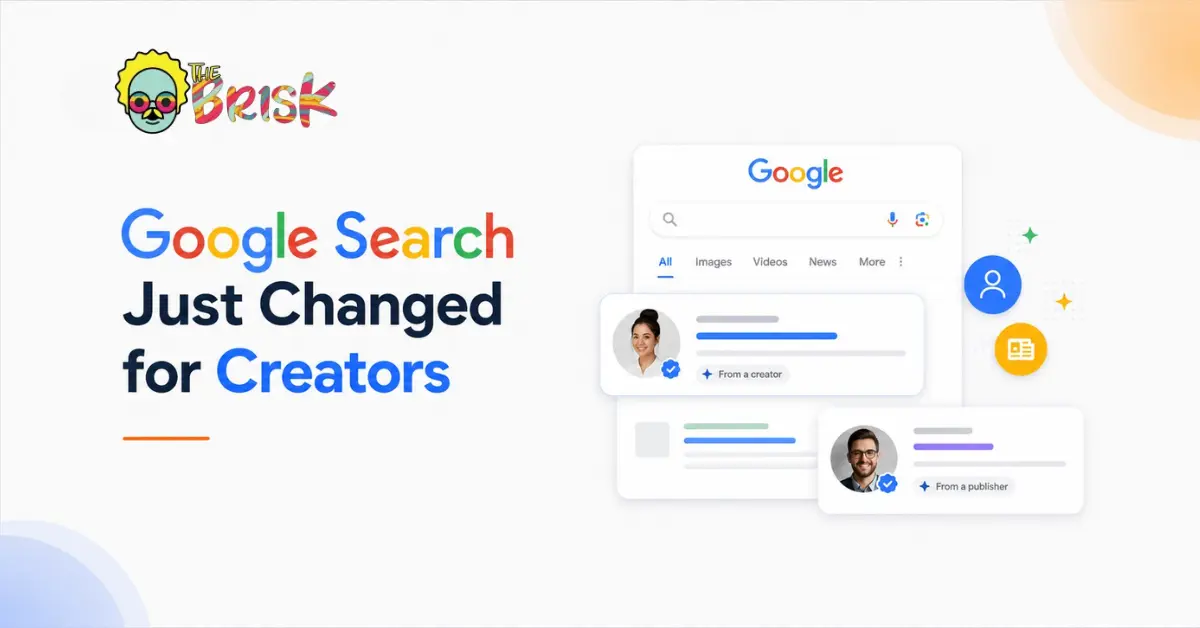
Google just launched Search Profiles — a feature that lets eligible creators and publishers claim a dedicated page on Google Search and Discover.
It brings your content from YouTube, Instagram, X, your website, and other platforms into one central place where audiences can find you and follow your work directly inside Google.
If you are a creator, publisher, or brand with a sizeable following and you have not heard of this yet, this guide covers exactly what Search Profiles are, who qualifies, what the feature actually does for your visibility, how to set one up, and whether it is worth your time.
What Is a Google Search Profile and Why Did Google Launch It Now
A Google Search Profile is a claimable, customisable page hosted on Google that pulls your latest articles, videos, and social posts into one destination.
Think of it as a Google-native landing page for your content identity — a place where someone who searches your name or comes across your content on Discover can follow you, browse your work, and stay connected without leaving Google’s ecosystem.
Google announced the feature on June 4, 2026, initially available in the United States only, with international expansion planned later in the year.
The timing is not random. Research published in late 2025 found that Google Discover now accounts for roughly two-thirds of Google referrals to news websites — meaning Discover has become a bigger traffic channel for publishers than traditional web search in many cases.
At the same time, AI Overviews are appearing in approximately 20% of all Google searches, and independent research by Seer Interactive found that when an AI Overview is present, organic click-through rates dropped 61% between June 2024 and September 2025.
Pew Research confirmed the mechanism: only 8% of users who encounter an AI summary click through to an external site — half the rate of users who do not.
Google is building creator infrastructure at the exact moment its AI features are eating traditional traffic. Whether you read that as compensation or coincidence, the practical implication is the same: Discover and the Follow mechanism are becoming increasingly important distribution channels, and Search Profiles give eligible creators a direct way to build on both.
Who Is Eligible for a Google Search Profile
Not every creator or publisher can claim a profile. Google has set minimum follower thresholds on at least one supported platform:
- YouTube: 100,000 subscribers
- Instagram: 100,000 followers
- X (formerly Twitter): 100,000 followers
- TikTok: 300,000 followers
You only need to meet the threshold on one platform, not all of them. You must be at least 18 years old. Google does allow someone aged 18 or over to create and manage a profile on behalf of a minor creator.
The feature is currently available in the US only. Google has said it plans to expand to more publishers and creators worldwide, but no timeline has been confirmed.
The follower requirement is intentionally high. Google is not building this for emerging creators — it is building it for people who have already demonstrated the ability to build and hold an audience.
The creators and publishers who qualify are precisely the ones whose names generate significant search volume and who have the leverage to route their audiences elsewhere. Search Profiles are, in part, a retention tool.
What a Google Search Profile Actually Includes
Once claimed and set up, a Search Profile contains:
- Your identity layer: An avatar, a header image, a bio, and links to your website and connected social and video accounts.
- Your content feed: Articles, videos, and social posts from your linked platforms, updated automatically. New content from connected accounts typically appears on your profile within 24 hours.
- Pinned content: You can pin specific pieces of work to the top of your profile — useful for highlighting your most important content, a recent release, or a flagship project.
- A Follow on Google button: The most functionally important element. When someone clicks Follow, they signal interest in your content to Google’s systems, making them more likely to see your content in their Google Discover feed.
- A shareable direct URL: Your profile gets a direct URL at profile.google.com that you can share anywhere — on social platforms, in email newsletters, in bio links.
Where Google Search Profiles Appear
On mobile, Search Profiles surface in three places:
- A “View Search Profile” link at the bottom of your Knowledge Panel when someone searches your name in Google
- By tapping your name above one of your cards in the Google Discover feed
- Via your direct profile URL, which you can share anywhere
How the Follow Button Works and Why It Matters More Than the Profile Itself
The Follow button is the most consequential part of the entire feature, and it is the reason Search Profiles matter beyond just having a tidy page.
When a user follows your Search Profile, they are making an explicit declaration of interest within Google’s system. Google uses that signal to surface more of your content in their Google Discover feed — the personalized content feed on the home screen of the Google app, which reaches over a billion users monthly.
This is a meaningfully different distribution mechanism from search rankings. Ranking in search is competitive, algorithmic, and increasingly disrupted by AI Overviews appearing before users reach your link. Discover distribution via Follow is preference-based.
A user who follows you has told Google they want your content. That is a durable, direct signal that works independently of keyword rankings or algorithm changes.
The September 2025 expansion of Discover already introduced the Follow button for websites and creators alongside social posts from X, Instagram, and YouTube Shorts. Search Profiles are the logical next step — giving the Follow button a central home and giving creators a page to send people to when asking them to follow.
Does the following affect your search rankings? No. Google’s help documentation is explicit on this. Creating a Search Profile and accumulating followers does not affect where your pages rank in search results. The benefit is entirely on the Discover side.
The Knowledge Panel Connection
One benefit of claiming a Search Profile that has not received as much attention is its relationship to Knowledge Panels.
Google confirmed: “Claiming a profile may trigger the creation of a Knowledge Panel for eligible publishers and creators. If you already have a Knowledge Panel, it will be enhanced with your updated avatar, latest content, and a direct profile link.”
For creators and publishers who have been trying to get a Knowledge Panel through Google’s existing verification process — which can be slow, opaque, and inconsistent — claiming a Search Profile is a faster, more direct route.
A Knowledge Panel with your latest content, your avatar, and your profile link embedded is a significantly richer branded presence in search results than most publishers have previously had access to.
How to Set Up Your Google Search Profile
If you meet the eligibility requirements, the setup process is straightforward:
Step 1: Go to profile.google.com/claim
Step 2: Sign in with the Google account associated with your content
Step 3: Link at least one qualifying social account that meets the follower threshold
Step 4: Once a qualifying account is linked, click “Create Profile”
Step 5: Customise your profile — add your avatar, bio, website link, and any additional social or video accounts you want to connect
Step 6: Pin your most important recent content to the top of your profile
Your handle is automatically set to match your most-followed linked account. If that handle is already taken by another user, Google assigns the next most-followed option.
Important: any changes to your profile name, social links, or bio require Google approval. Submitted changes go into “Pending” status until reviewed. Plan for this before making significant changes, as the approval process is not instant.
What You Should Do Immediately After Claiming Your Profile
Claiming the profile is the easy part. The Follow count you build over time is what determines whether this feature actually delivers distribution value for you.
The most direct way to build follows is to treat your profile URL the way you would treat a YouTube channel link or newsletter subscription page. Put it in your bio on every platform where you are active. Mention it when asking your existing audience to stay connected.
Include it in your email newsletter footer. Feature it when your audience is most engaged — at the end of a high-performing video, post, or article.
The creators who will benefit most from Search Profiles are the ones who actively move their existing audiences to Google’s Follow mechanism rather than waiting for organic discovery. Passive profile ownership produces passive results.
Beyond follows, continue investing in content quality and consistency. Discover favours content that earns engagement, gets shared, and comes from sources with demonstrated topical focus. A strong Follow base and strong Discover content quality compound over time into a meaningful, algorithm-resistant distribution channel.
What This Means for Publishers and Brands
For media publishers — editorial outlets, niche publications, vertical brands with consistent content — Search Profiles introduce a Google-native audience relationship that has not existed before.
A reader who follows your Search Profile is actively choosing to see more of your content in Discover.
That is a fundamentally different relationship than the one publishers typically have with Google’s algorithm, where your content appears when Google decides to show it to someone. A Follow is a direct preference signal. You own that relationship in a way that passive ranking never offered.
For brands publishing content as part of a content marketing strategy, the eligibility threshold is the primary gating factor. If your social accounts have not crossed 100,000 followers on a supported platform, Search Profiles are not yet available to you.
But the feature is worth knowing about as a target, because it represents a channel that rewards genuine audience building — the kind that cannot be shortcut.
How to Think About Search Profiles Inside Your Broader Visibility Strategy
Search Profiles do not replace SEO. They do not fix declining organic traffic. They do not override the effects of AI Overviews on click-through rates.
What they do is give creators and publishers with established audiences a new mechanism to build durable distribution inside Google’s ecosystem — one that is preference-driven rather than algorithm-driven.
In an environment where AI-generated summaries are increasingly intercepting clicks before they reach your content, having an audience of followers who have explicitly opted into your content on Discover is a genuine hedge against that erosion.
The broader direction Google is moving in is clear: Discover is becoming a primary surface, Follow mechanics are becoming central to how content finds its audience there, and Search Profiles are the infrastructure that makes all of it cohesive. Creators who qualify and build on this infrastructure now will be better positioned than those who discover it later.
Published by The Brisk. We work with creators, publishers, and brands on visibility strategies that hold up through algorithm changes. If you want to understand how these updates affect your specific situation, we are happy to talk.



No Comments