
Table of Contents
Introduction
Modern web analytics tools (whether tag-based or log-based) almost always employ cookies to track user behaviour.
A cookie can either store the user’s session information or an identifier that can be used as a key to get the user’s session information from the analytics package’s internal storage.
Cookies can be deleted periodically due to people’s concerns about their privacy. Only a tiny fraction of Internet users (about 2%) actively prevent cookies from being stored on their computers.
Website owners can learn more about their customers’ experiences and identify new and returning users by using the information provided by cookies, which are typically used anonymously.
Tracking Cookies
Tracking cookies are cookies that are put on a visitor’s browser by the website they are visiting or a third party.
These cookies monitor a visitor’s online activity and store information about the visitor, including the visitor’s web browser type, version, operating system, mobile device type, manufacturer, and search terms.
This information is useful for executing targeted marketing campaigns and analysing website usage.
Are Tracking Cookies Harmful?
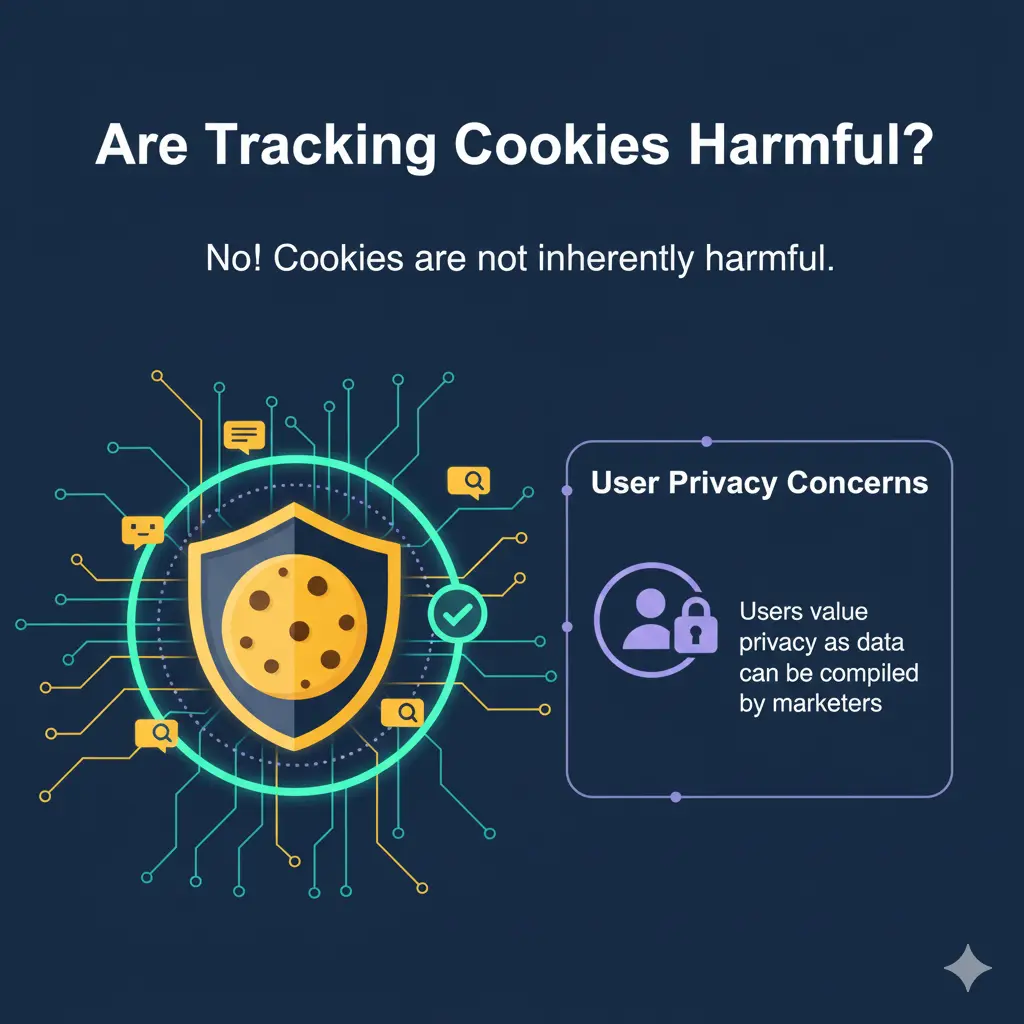
No! Cookies, including tracking cookies, are not inherently harmful. You should not worry about them infecting your devices with malware or installing unwanted software.
Users who value their privacy may have reservations about the usage of tracking cookies, as these files can be used to compile information about the user for use by marketers.
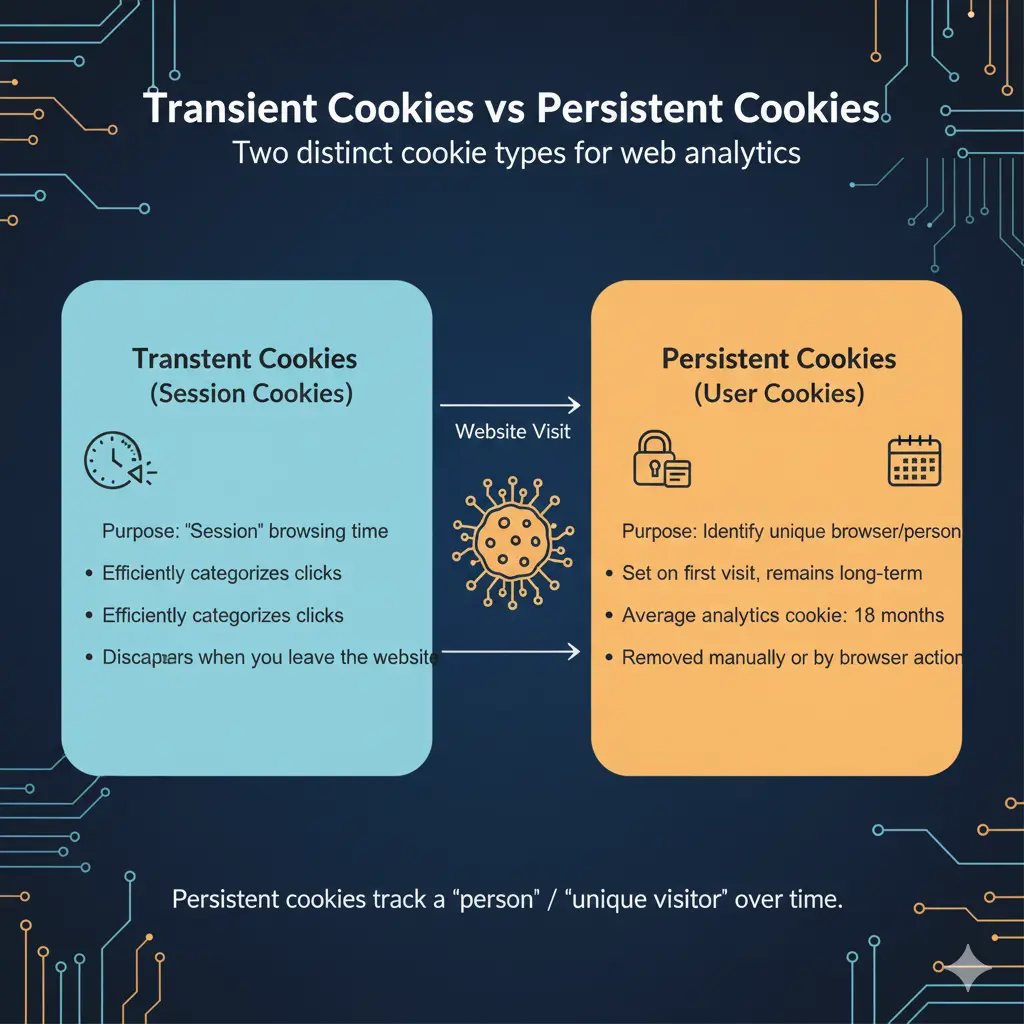
Transient Cookies vs Persistent Cookies
There are two distinct cookie types used by web analytics software. These types of cookies are usually known as “Transient” and “Persistent” cookies. Cookies can be divided into two categories: session cookies and use cookies.
Transient cookies are there to help “session” your time spent browsing a website. You are, in essence, going to leave after performing a series of clicks. One session. These clicks can be more efficiently categorised thanks to the transient cookies.
As soon as you leave the website where the transient cookie was set, it disappears.
The first time you visit a website, a persistent cookie will be put in your browser and will remain there for as long as the website wants it to.
For instance, the average lifetime of an analytics cookie is 18 months, although this can range from 18 months to 18 years for other tools.
Since they are the closest thing to tracking a “person” / “unique visitor,” persistent cookies assist in identifying a unique browser visiting your website.
The persistent cookie will remain in your browser unless you manually remove it, reinstall your browser, or perform another action that deletes or disables cookies.
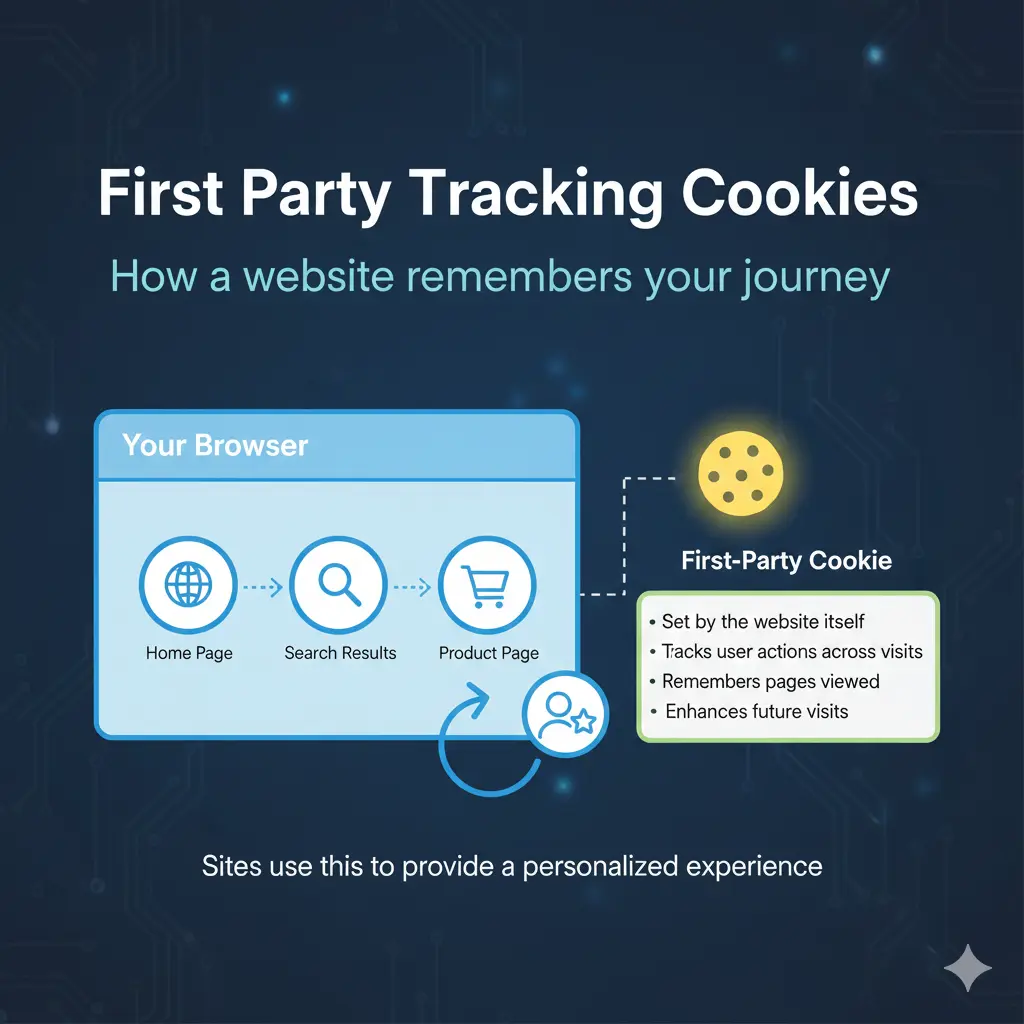
First Party Tracking Cookies
To keep track of a user’s actions across numerous visits, see what pages they’ve seen, etc., a website will typically utilise what is known as “first-party tracking cookies.”
Users’ future visits will benefit from this data’s inclusion. For instance, you may have seen that the sites you’ve lately visited on the same website have been linked. Cookies set by the site itself (first-party cookies) allow for this functionality.
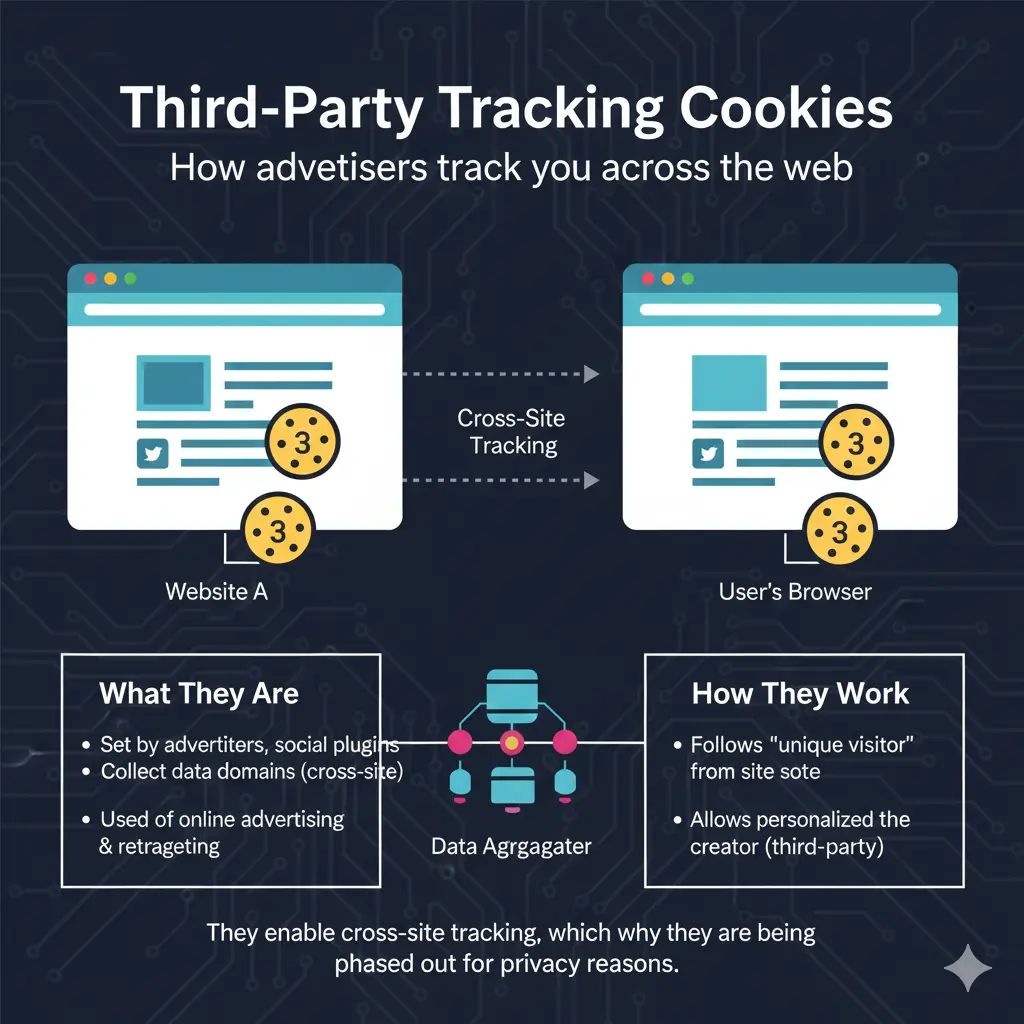
Third-Party Tracking Cookies
When you visit a website, a third-party server places a small piece of code onto your browser to keep track of your surfing habits. Display advertisements, social media plugins, pop-up windows for live chat, and web analytics tools all fall under the category of “third-party cookies”. These are made primarily by advertisers, data aggregators, and other websites.
Since they collect and share data across domains, third-party trackers (or cookies) are also known as cross-site cookies. It is accessible to the third party who first created them. Furthermore, online advertising and retargeting make heavy use of third-party tracking cookies.
Third-party cookies can be useful in a few situations. Most frequently, this is done by ad-serving networks so that they may follow a “unique visitor” from one website to another. As a result, you (the sender) don’t have much of a choice, even if the third-party cookie is
annihilated and denied several more times. Unfortunately, that’s exactly the way the internet protocols are set up.
Rates of Cookie Deletion
You must understand how declining a cookie does not have the same effect as erasing it. Rejection prevents you from accepting (worsens tracking). However, after a session (visit), tracking becomes less accurate due to deletion.
Cookie-deletion rates are of interest to all parties. The term “global standard” is misleading.
Having a “third party” with the kind of access to actual data needed to produce an objective “standard” is likewise incredibly challenging.
Your client’s personal preferences and the configuration of their web browsers and other applications will be the most important determinants. Moreover, it can vary widely depending on the location.
Importance of Using Cookies
Web analytics tools today all rely on cookies to “accurately” tally the number of visitors to a website.
Your results can improve with the help of cookies.
Metrics such as the ratio of new visitors to total visitors, as well as the percentage of visitors that make a purchase, will make more sense to you.
However, you are under no obligation to employ cookies if your company’s higher-ups or, more likely, your website’s visitors prefer that you don’t.
Even though you won’t be able to track all of the above KPIs without cookies, the information you do gather will be of great use. Popularity rankings, income, referring domains, keywords used in search engines, and much more may be determined from these statistics.
Don’t let the absence of cookies prevent you from drawing useful conclusions from your web analytics.
Even if the information won’t be flawless, perfection is overrated.
It is possible to calculate Visits and Visitors without using cookies with certain analytics solutions. You can identify users by their browsers, operating systems, and other identifying information.
Check with the higher-ups and the clients to make sure that’s okay. Then by all means put them to use. If that’s not possible, it’s important to emphasise once more that even anonymous data can provide valuable insights.
The brisk website helps you understand the importance of tracking cookies on web analytics visitors. Here, you can get much more information related to web analytics.




No Comments